
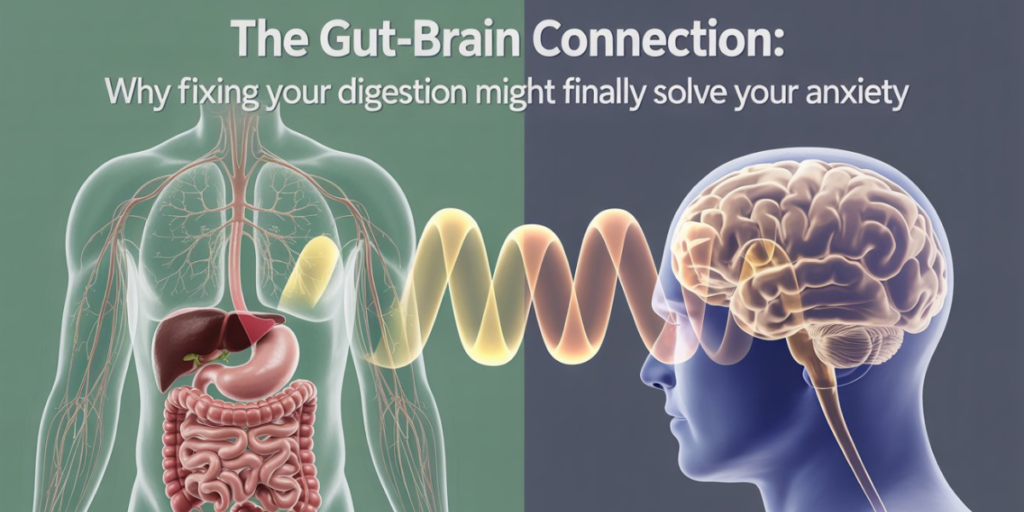
The Gut-Brain Connection: Why Fixing Your Digestion Might Finally Solve Your Anxiety
Author: Rohan Smith | Functional Medicine Practitioner | Adelaide, SA
Quick Answer
The gut–brain axis is a bidirectional communication network linking the gastrointestinal system with the central nervous system. This network is mediated by the vagus nerve, immune signaling, microbial metabolites, and the enteric nervous system (ENS). Research shows that anxiety is commonly associated with gut dysbiosis, intestinal inflammation, and altered gut barrier function—factors that may influence immune activation and neurotransmitter signaling.
Although approximately 90% of the body’s serotonin is produced in the gastrointestinal tract, this serotonin primarily acts locally within the gut and peripheral nervous system rather than directly determining brain serotonin levels. Even so, digestive health may still influence anxiety symptoms indirectly through inflammatory signaling, vagal communication, microbial metabolites, and nutrient absorption pathways. In cases where anxiety and digestive symptoms persist without clear answers, exploring the gut–brain connection through advanced testing can help uncover underlying drivers. In some individuals, addressing gut dysfunction—such as SIBO, dysbiosis, or nutrient malabsorption—may support improvements in anxiety symptoms when used alongside appropriate mental health care.
Core Concept: Understanding the Gut–Brain Axis
The gut–brain axis is a complex, two-way communication system linking the gastrointestinal tract with the brain. A central component of this system is the enteric nervous system (ENS)—a network of approximately 500 million neurons embedded within the gut wall and often referred to as the body’s “second brain” (1).
The ENS communicates with the central nervous system through multiple pathways, including the vagus nerve, immune mediators, hormones, and microbial metabolites produced by gut bacteria (2), (13). This bidirectional signaling helps explain why psychological stress can disrupt digestion—and why disturbances within the gut microbiome may influence mood, cognition, and stress responsiveness.
Gut Barrier Dysfunction and Anxiety
Increased intestinal permeability—a term commonly used in clinical contexts to describe impaired gut barrier integrity—refers to a state in which the intestinal lining becomes less effective at regulating the passage of bacterial components into the bloodstream.
When bacterial fragments such as lipopolysaccharides (LPS) cross the gut barrier, the immune system may respond by releasing pro-inflammatory cytokines. Over time, this can contribute to chronic low-grade systemic inflammation (3). Inflammatory signaling has been consistently associated with anxiety and depressive symptoms, potentially through effects on neurotransmitter metabolism, hypothalamic–pituitary–adrenal (HPA) axis regulation, and blood–brain barrier signaling (3), (10).
Importantly, this does not mean gut barrier dysfunction causes anxiety. Rather, it may represent one physiological factor that contributes to symptom severity in susceptible individuals.
The SIBO–Anxiety Relationship
Small Intestinal Bacterial Overgrowth (SIBO) occurs when excessive bacteria colonise the small intestine. In addition to digestive symptoms such as bloating and reflux, SIBO has been associated with cognitive complaints including “brain fog” and mood disturbances.
Certain bacterial metabolites and fermentation by-products may influence nervous system signaling and systemic acid–base balance. In some individuals, this has been associated with neurocognitive symptoms (5). Clinically, some patients report reductions in anxiety symptoms following targeted SIBO treatment; however, responses vary and causation cannot be assumed.
Solution / Test Explained: Functional Gut Mapping
At Elemental Health and Nutrition (Adelaide, South Australia), functional testing may be used to explore gut-related contributors that are not typically identified through standard medical investigations.
Comprehensive Stool Analysis
A comprehensive stool analysis can assess microbial diversity, inflammatory markers, and bacterial species associated with altered gut–brain signaling and neuroactive metabolite production (4), (7), (11).
SIBO Breath Testing
SIBO breath testing measures hydrogen and methane production to identify bacterial overgrowth patterns that may contribute to systemic symptoms (5).
Targeted Nutrient Assessment
Evaluates nutrients such as vitamin B6, vitamin B12, zinc, and magnesium, which are required for normal neurotransmitter synthesis and nervous system regulation.
These investigations do not diagnose anxiety disorders. Instead, they help identify potentially modifiable physiological contributors that may be relevant within a broader, integrative care plan and must always be interpreted in clinical context.
When to Consider Gut–Brain Investigation
Further assessment of gut–brain interactions may be appropriate if you experience:
- Anxiety symptoms that respond only partially to psychological therapy or medication
- Digestive symptoms that worsen alongside mood changes
- A history of frequent antibiotic use or gastrointestinal infections (6)
- Cognitive symptoms such as brain fog or post-meal fatigue
In these situations, gut microbiome testing may help clarify whether digestive factors are contributing to symptom persistence.
If anxiety symptoms are severe, rapidly worsening, or associated with safety concerns, urgent mental health assessment remains essential.
Addressing the root causes of chronic fatigue and stress-related symptoms through a functional medicine approach can provide a more complete picture of recovery.
Key Takeaways
- Convalescence is a biological recovery process, not a lack of motivation.
- Rest supports stress regulation, brain function, and emotional resilience.
- Persistent symptoms may reflect insufficient recovery rather than insufficient effort.
- Structured rest can be integrated without abandoning daily responsibilities.
Next Steps
If you are experiencing ongoing stress, reduced resilience, or difficulty recovering despite lifestyle efforts, it may be worth exploring whether recovery capacity—not motivation—is the limiting factor. You can learn more about stress, resilience, and recovery support through our mental health resources.
If you feel you need personalized support to address these challenges, we invite you to contact us for a consultation. Our team is here to help guide you through your recovery journey.
Frequently Asked Questions
Can gut issues cause anxiety?
Does treating SIBO cure anxiety?
Is most serotonin really made in the gut?
Can probiotics help anxiety?
Should I stop my anxiety medication if I work on my gut?
Key Insights
- Gut health and anxiety are biologically linked, but the relationship is indirect and multifactorial
- Immune and inflammatory signaling play a central role in gut–brain communication
- Nutrient absorption matters: impaired digestion may affect neurotransmitter synthesis capacity
- Supporting gut health may be adjunctive, not curative, in anxiety management
Your Next Step
If anxiety symptoms persist despite addressing psychological factors alone, a gut-focused assessment may help identify contributing physiological stressors. Functional testing can provide data to support a targeted, integrative care plan—used alongside appropriate mental health support.
To explore whether gut testing may be appropriate for you, you can book a complimentary 15-minute discovery call with Rohan, functional medicine practitioner at Elemental Health and Nutrition.
References
- Furness JB. The enteric nervous system and neurogastroenterology. Nat Rev Gastroenterol Hepatol. 2012 May;9(5):286-94. doi: 10.1038/nrgastro.2012.32. https://doi.org/10.1038/nrgastro.2012.32
- Breit S, Kupferberg A, Rogler G, Hasler G. Vagus Nerve as Modulator of the Brain-Gut Axis in Psychiatric and Inflammatory Disorders. Front Psychiatry. 2018 Mar 13;9:44. doi: 10.3389/fpsyt.2018.00044. https://doi.org/10.3389/fpsyt.2018.00044
- Miller AH, Raison CL. The role of inflammation in depression: from evolutionary imperative to modern treatment target. Nat Rev Immunol. 2016 Jan;16(1):22-34. doi: 10.1038/nri.2015.5. https://doi.org/10.1038/nri.2015.5
- Valles-Colomer M, Falony G, Darzi Y, Tigchelaar EF, Wang J, Tito RY, Schiweck C, Kurilshikov A, Joossens M, Wijmenga C, Claes S, Van Oudenhove L, Zhernakova A, Vieira-Silva S, Raes J. The neuroactive potential of the human gut microbiota in quality of life and depression. Nat Microbiol. 2019 Apr;4(4):623-632. doi: 10.1038/s41564-018-0337-x. https://doi.org/10.1038/s41564-018-0337-x
- Rao SSC, Rehman A, Yu S, de Andino NM. Brain fogginess, gas and bloating: a link between SIBO, probiotics and metabolic acidosis. Clin Transl Gastroenterol. 2018 Jun 19;9(6):162. doi: 10.1038/s41424-018-0030-7. https://doi.org/10.1038/s41424-018-0030-7
- Slyepchenko A, Maes M, Jacka FN, Köhler CA, Barichello T, Carvalho AF, Quevedo J, McIntyre RS, Berk M. Gut Microbiota, Bacterial Translocation, and Interactions with Diet: Pathophysiological Links between Major Depressive Disorder and Non-Communicable Medical Comorbidities. Psychother Psychosom. 2017;86(1):31-46. doi: 10.1159/000448957. https://doi.org/10.1159/000448957
- Strandwitz P, Kim KH, Terekhova D, Liu JK, Sharma A, Levering J, McDonald D, Dietrich D, Ramadhar TR, Lekbua A, Milshteyn A, Castro CM, Garza-Ramos A, Weinstock GM, Gonzalez FJ, Clardy J, Lewis K. GABA-modulating bacteria of the human gut microbiota. Nat Microbiol. 2019 Mar;4(3):396-403. doi: 10.1038/s41564-018-0307-3. https://doi.org/10.1038/s41564-018-0307-3
- Sarkar A, Lehto SM, Harty S, Dinan TG, Cryan JF, Burnet PWJ. Psychobiotics and the Manipulation of Bacteria-Gut-Brain Signals. Trends Neurosci. 2016 Nov;39(11):763-781. doi: 10.1016/j.tins.2016.09.002. https://doi.org/10.1016/j.tins.2016.09.002
- Schmidt K, Cowen PJ, Harmer CJ, Jebb SA, Trudel B, Jones BE. Prebiotic intake reduces waking cortisol response in healthy volunteers. Psychopharmacology (Berl). 2015 May;232(10):1793-801.
- Obrenovich ME. Leaky Gut, Leaky Brain? Microorganisms. 2018;6(4):107. doi: 10.3390/microorganisms6040107.
- Cryan JF, Dinan TG. Mind-altering microorganisms: the impact of the gut microbiota on brain and behaviour. Nat Rev Neurosci. 2012 Oct;13(10):701-12. doi: 10.1038/nrn3346.
- Foster JA, McVey Neufeld KA. Gut-brain axis: how the microbiome influences anxiety and depression. Trends Neurosci. 2013 May;36(5):305-12. doi: 10.1016/j.tins.2013.01.005.
- Carabotti M, Scirocco A, Maselli MA, Severi C. The gut-brain axis: interactions between enteric microbiota, central and enteric nervous systems. Ann Gastroenterol. 2015 Apr-Jun;28(2):203-209.
- Kelly JR, Borre Y, O’Brien C, Patterson E, El Aidy S, Deane J, Kennedy PJ, Beers S, Scott K, Moloney G, Hoban AE, Scott L, Fitzgerald P, Ross P, Stanton C, Clarke G, Cryan JF, Dinan TG. Transferring the blues: Depression-associated gut microbiota induces neurobehavioural changes in the rat. J Psychiatr Res. 2016 Oct;82:109-18. doi: 10.1016/j.jpsychires.2016.07.019.
- Mayer EA. Gut feelings: the emerging biology of gut-brain communication. Nat Rev Neurosci. 2011 Aug 18;12(8):453-66. doi: 10.1038/nrn3071.