Organic Acid Testing: Brain Fog, Anxiety & Fatigue
Quick Answer
Organic Acid Testing (OAT) is a functional urine test used in integrative medicine to measure metabolic by-products, including markers of gut microbial activity, mitochondrial function, neurotransmitter metabolism, and oxidative stress. By evaluating these organic acid metabolites, OAT may help practitioners identify biochemical patterns associated with brain fog, anxiety, low mood, and chronic fatigue, particularly when standard blood tests return normal results.
At a Glance
- Organic Acid Testing measures over 70 urinary metabolites related to gut microbiota, the Krebs cycle, neurotransmitter pathways, and oxidative stress status.
- The gut–brain axis, a bidirectional communication network involving the vagus nerve, enteric nervous system, and hypothalamic-pituitary-adrenal (HPA) axis, may influence cognitive and mood symptoms.
- Bacterial metabolites such as HPHPA (4-hydroxyphenylpropionic acid) and DHPPA can indicate Clostridia overgrowth, which has been associated with altered dopamine metabolism.
- OAT is a functional assessment tool, not a diagnostic test, results require clinical interpretation alongside patient history and other investigations.
- Markers of glutathione status and mitochondrial efficiency on OAT may help explain persistent fatigue and neuroinflammation.
Organic Acid Testing and the Gut–Brain Axis
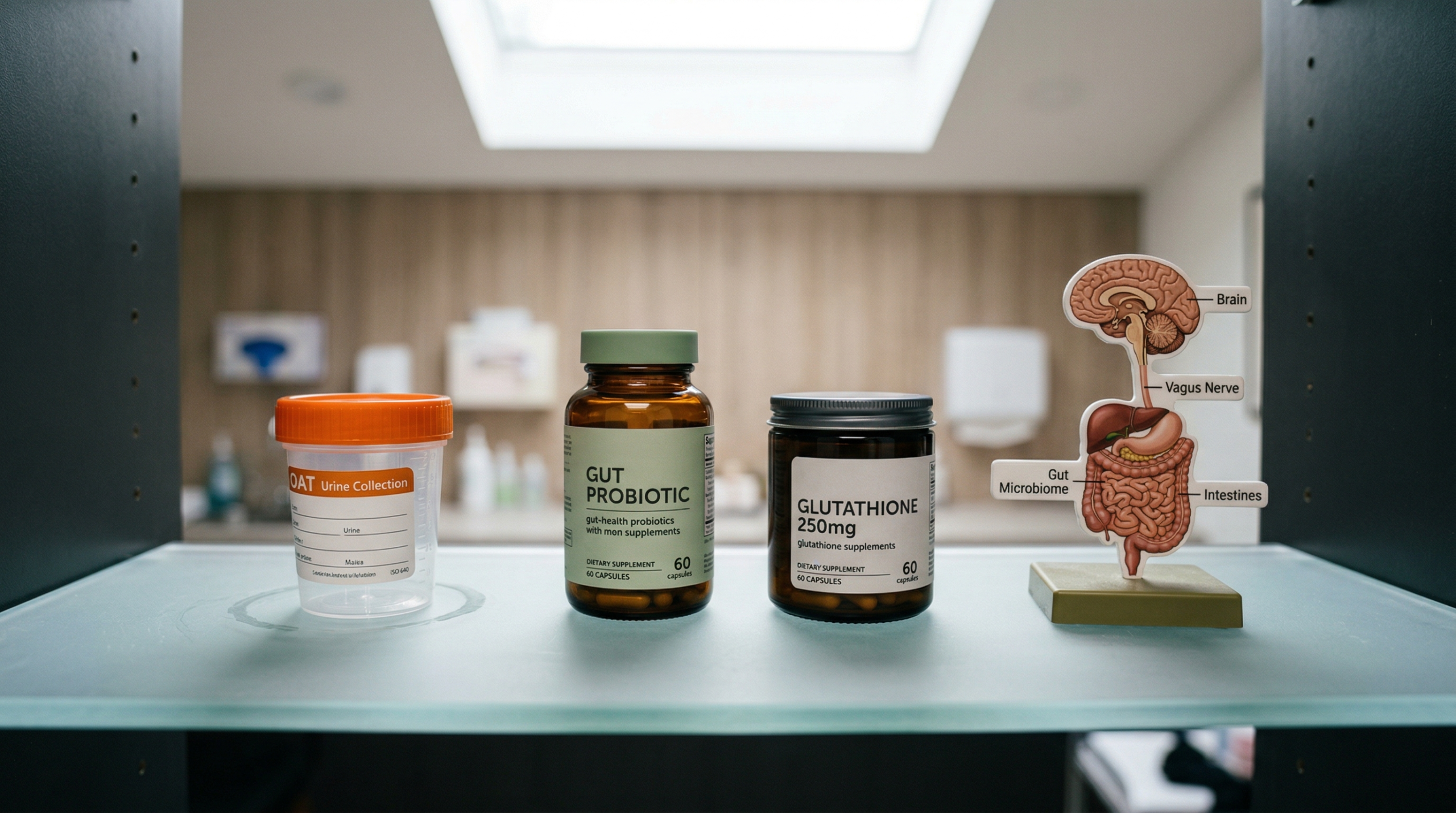
The gut–brain axis is a bidirectional communication network involving the vagus nerve, the enteric nervous system, the hypothalamic-pituitary-adrenal (HPA) axis, and microbial metabolites produced by the intestinal microbiome. Many people experience cognitive or mood-related symptoms without a clear explanation. While diet, stress, and lifestyle play important roles, this axis is frequently overlooked in conventional assessments.
Organic Acid Testing provides insight into this connection by assessing metabolic by-products related to gut microbial activity, nutrient status, mitochondrial function, and detoxification pathways. In functional medicine, OAT is interpreted alongside clinical history, symptoms, and other investigations rather than used as a standalone diagnostic tool.
This testing approach is often used when exploring complex gut-related presentations such as dysbiosis, which are discussed in more detail in our gut microbiome resources.
What Is Organic Acid Testing?
Organic Acid Testing is a non-invasive urine test that measures organic acids, intermediate compounds produced during metabolism in the citric acid cycle (Krebs cycle), fatty acid oxidation, and amino acid catabolism. These markers can reflect how the body processes food, generates cellular energy via adenosine triphosphate (ATP) production, responds to oxidative stress, and interacts with gut microbes including Clostridia, Candida, and Aspergillus species.
| Marker Category | What It Reflects | Example Markers |
|---|---|---|
| Microbial metabolites | Bacterial and yeast overgrowth patterns | HPHPA, DHPPA, D-arabinitol |
| Krebs cycle intermediates | Mitochondrial energy production efficiency | Citric acid, succinic acid, fumaric acid |
| Neurotransmitter metabolites | Dopamine, serotonin, and norepinephrine turnover | Homovanillic acid (HVA), 5-hydroxyindoleacetic acid (5-HIAA), vanillylmandelic acid (VMA) |
| Oxidative stress markers | Glutathione status and antioxidant capacity | Pyroglutamic acid, 2-hydroxyhippuric acid |
| Oxalate markers | Oxalate metabolism and potential mineral interference | Glyceric acid, glycolic acid, oxalic acid |
The Gut–Brain Connection Explained
Research by Carabotti et al. (2015) established that the gut and brain communicate through neural, immune, endocrine, and biochemical pathways. Gut microbes influence the availability and metabolism of neurotransmitter precursors, including tryptophan (a serotonin precursor) and tyrosine (a dopamine precursor), involved in mood regulation, cognition, and stress resilience. Yano et al. (2015) demonstrated that indigenous gut bacteria regulate host serotonin biosynthesis, with gut enterochromaffin cells producing approximately 90% of the body’s serotonin.
Because of this connection, gut imbalances may contribute to psychological symptoms commonly explored in functional approaches to mental health.
How Bacterial Metabolites May Influence Mental Wellbeing
Elevated levels of the Clostridia metabolite HPHPA (4-hydroxyphenylpropionic acid) have been associated with altered dopamine-to-norepinephrine conversion, as described by Shaw (2010). Organic Acid Testing measures these specific bacterial and yeast metabolites, by-products of microbial metabolism in the gut. Elevated levels of certain compounds may indicate dysbiosis and increased metabolic stress, which can indirectly affect neurotransmitter balance, mitochondrial function, and neuroinflammatory pathways. Strandwitz (2018) further demonstrated that specific gut bacteria can modulate gamma-aminobutyric acid (GABA) production, a key inhibitory neurotransmitter associated with anxiety regulation.
Other Key Marker Categories in OAT
Oxalate Markers
Oxalates are naturally occurring compounds found in various plant foods including spinach, rhubarb, and almonds. Siener and Hesse (2003) showed that gut microbiota, particularly Oxalobacter formigenes, play a significant role in oxalate degradation. Elevated oxalate-related markers may be associated with increased oxidative stress or altered mineral handling in susceptible individuals, particularly in the context of gut dysfunction.
Glutathione and Oxidative Stress Markers
Glutathione is a central antioxidant involved in Phase II liver detoxification and cellular protection, as reviewed by Wu et al. (2004) and Forman et al. (2009). Organic Acid Testing includes indirect markers such as pyroglutamic acid that may reflect increased oxidative stress or reduced glutathione recycling capacity.
Why Organic Acid Testing Matters
Conventional blood tests often assess whether values fall within population-based reference ranges but may not capture functional metabolic insufficiencies. Organic Acid Testing is used in functional medicine to explore underlying biochemical patterns, including mitochondrial dysfunction, which Rossignol and Frye (2012) linked to neurocognitive presentations, that may help explain persistent symptoms, particularly in people experiencing ongoing fatigue.
This is especially relevant for individuals investigating complex or unexplained symptoms often seen in chronic fatigue presentations.
When to Consider Organic Acid Testing
| Symptom Pattern | Relevant OAT Marker Categories |
|---|---|
| Persistent brain fog or cognitive fatigue | Krebs cycle intermediates, neurotransmitter metabolites |
| Anxiety or low mood without an obvious cause | GABA/glutamate markers, serotonin metabolites (5-HIAA) |
| Chronic fatigue or post-viral symptoms | Mitochondrial markers, oxidative stress indicators |
| Suspected gut dysbiosis with neurological features | Microbial metabolites (HPHPA, D-arabinitol) |
Next Steps After Testing
- Discuss with your practitioner: Results are used to guide personalised nutritional and lifestyle strategies based on your unique metabolic patterns.
- Address gut health: If microbial markers are elevated, targeted gut support may be an important first step in improving cognitive and mood symptoms.
- Consider ordering through a clinician: Where appropriate, Organic Acid Testing may be ordered through a practitioner using clinically validated laboratories such as the Organic Acid Test (OAT).
Frequently Asked Questions
Key Insights
- Organic Acid Testing offers a functional perspective on the gut–brain connection
- It identifies metabolic and microbial patterns rather than diagnosing disease
- Interpretation requires professional clinical context
- OAT complements but does not replace standard medical assessment
- It is particularly valuable when routine testing appears normal but symptoms persist
Citable Takeaways
- Organic Acid Testing measures over 70 urinary metabolites spanning microbial activity, mitochondrial function, neurotransmitter turnover, and oxidative stress, providing a functional snapshot that standard blood tests may miss (Lord & Bralley, 2008).
- The gut–brain axis involves bidirectional communication via the vagus nerve, HPA axis, and microbial metabolites, with gut enterochromaffin cells producing approximately 90% of the body’s serotonin (Yano et al., 2015).
- Elevated HPHPA, a Clostridia metabolite measured on OAT, has been associated with altered dopamine-to-norepinephrine conversion and may be relevant in neurocognitive symptom presentations (Shaw, 2010).
- Glutathione status, indirectly assessed via pyroglutamic acid on OAT, is central to Phase II detoxification and cellular protection against oxidative stress (Wu et al., 2004; Forman et al., 2009).
- Mitochondrial dysfunction, identifiable through Krebs cycle intermediates on OAT, has been linked to persistent fatigue and neurocognitive symptoms in a systematic review by Rossignol and Frye (2012).
- Oxalobacter formigenes and other gut bacteria play a significant role in oxalate degradation, and disruption of these populations may contribute to elevated urinary oxalate markers (Siener & Hesse, 2003).
When Gut–Brain Symptoms Don’t Have Clear Answers
If you are dealing with unresolved fatigue, cognitive symptoms, or mood changes and suspect gut-related factors may be playing a role, a functional medicine assessment can help determine whether Organic Acid Testing is appropriate. At Elemental Health and Nutrition, we focus on understanding underlying biochemical patterns rather than labelling symptoms in isolation.
References
- Jones DS, Quinn RA. Urinary organic acids as clinical biomarkers: a review. Clin Chem. 2020 Jun;66(6):755-765. https://doi.org/10.1093/clinchem/hvaa057
- Lord RS, Bralley JA. Clinical applications of urinary organic acids. Altern Med Rev. 2008 Sep;13(3):216-28. https://pubmed.ncbi.nlm.nih.gov/18950248
- Carabotti M et al. The gut-brain axis: interactions between enteric microbiota, central and enteric nervous systems. Ann Gastroenterol. 2015 Apr-Jun;28(2):203-209. https://www.ncbi.nlm.nih.gov/pmc/articles/PMC4367209/
- Buhner SH. Functional interpretation of organic acid testing in integrative medicine. Integr Med (Encinitas). 2019 Oct;18(5):28-35. https://pubmed.ncbi.nlm.nih.gov/31975784/
- Nicholson JK et al. Host-gut microbiota metabolic interactions. Science. 2012 Jun 8;336(6086):1262-7. https://doi.org/10.1126/science.1223813
- Foster JA et al. Gut-brain axis: how the microbiome influences anxiety and depression. Trends Neurosci. 2013 May;36(5):305-12. https://doi.org/10.1016/j.tins.2013.01.005
- Yano JM et al. Indigenous bacteria from the gut microbiota regulate host serotonin biosynthesis. Cell. 2015 Apr 9;161(2):264-76. https://doi.org/10.1016/j.cell.2015.02.047
- Eisenhofer G et al. Catecholamine metabolism: a contemporary view with implications for physiology and medicine. Pharmacol Rev. 2004 Sep;56(3):331-49. https://doi.org/10.1124/pr.56.3.1
- Strandwitz P. Neurotransmitter modulation by the gut microbiota. Brain Res. 2018 Sep 15;1693(Pt B):128-133. https://doi.org/10.1016/j.brainres.2018.03.015
- Shaw W. Increased urinary bacterial metabolites in neurocognitive disorders. Clin Chim Acta. 2010 Apr 2;411(7-8):543-8. https://doi.org/10.1016/j.cca.2010.01.013
- Rossignol DA, Frye RE. Mitochondrial dysfunction in autism spectrum disorders: a systematic review and meta-analysis. Mol Psychiatry. 2012 Mar;17(3):290-314. https://doi.org/10.1038/mp.2010.136
- Hodgkinson A. Oxalate metabolism and clinical relevance. Kidney Int. 2000 Jun;57(6):2241-7. https://doi.org/10.1046/j.1523-1755.2000.00105.x
- Siener R, Hesse A. Influence of gut microbiota on oxalate metabolism. Urol Res. 2003 Dec;31(6):397-403. https://doi.org/10.1007/s00240-003-0351-2
- Wu G, Fang YZ, Yang S, Lupton JR, Turner ND. Glutathione metabolism and its implications for health. J Nutr. 2004 Mar;134(3):489-92. https://doi.org/10.1093/jn/134.3.489
- Forman HJ, Zhang H, Rinna A. Glutathione: overview of its protective roles, measurement, and biosynthesis. Mol Aspects Med. 2009 Feb-Apr;30(1-2):1-12. https://doi.org/10.1016/j.mam.2008.08.006