
Chronic Fatigue Syndrome and Sleep Disturbance
Quick Answer
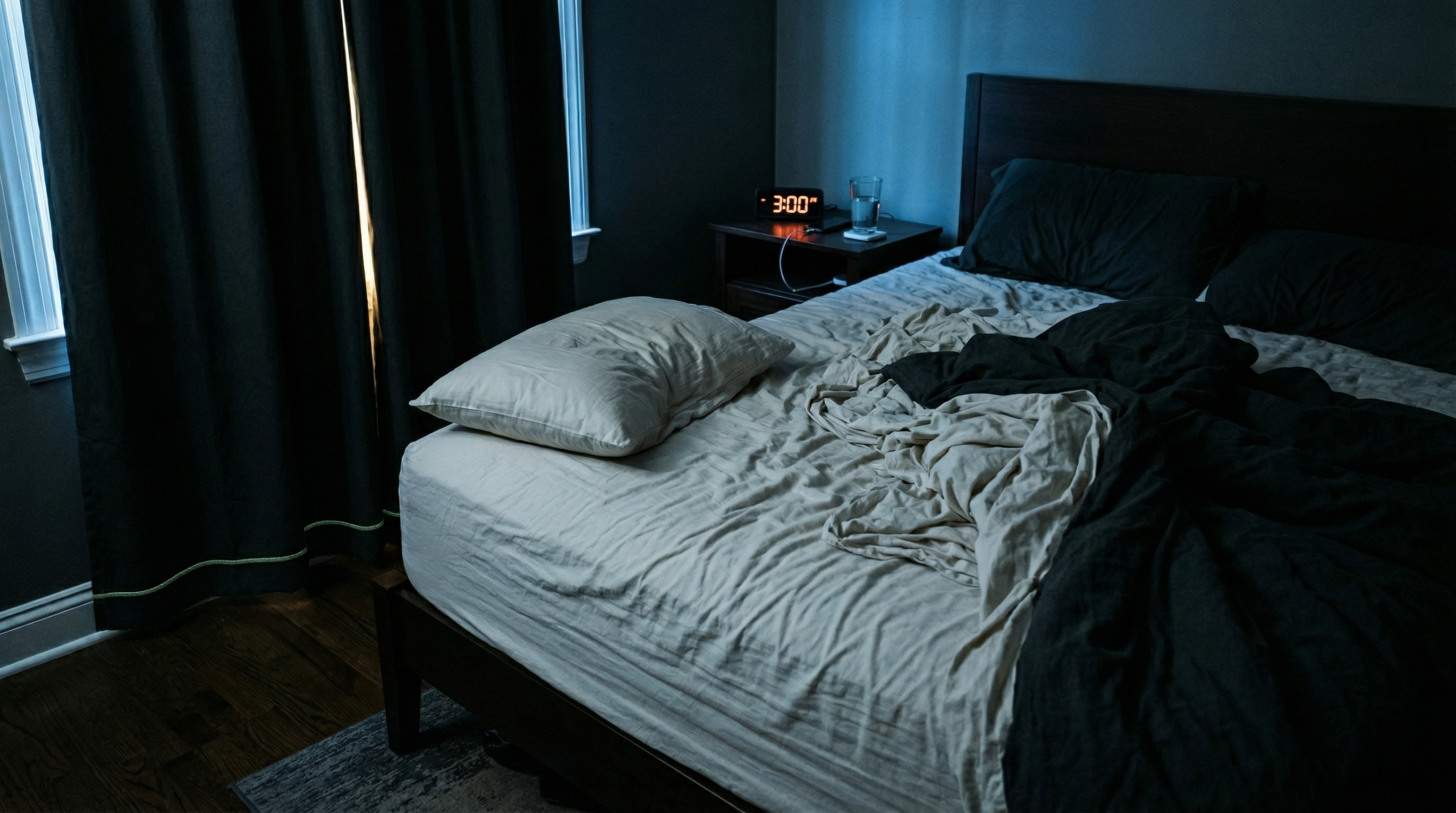
Sleep disturbance is a defining feature of Chronic Fatigue Syndrome (CFS/ME), affecting up to 95% of individuals according to the Institute of Medicine (2015). Most people with CFS/ME experience non-restorative sleep, insomnia, hypersomnia, or disrupted circadian rhythms. These disturbances are associated with neuroendocrine, immune, autonomic, and mitochondrial dysregulation rather than poor sleep habits alone, and may persist regardless of total sleep duration.
At a Glance
- Non-restorative sleep is a core diagnostic criterion for CFS/ME as defined by the Institute of Medicine (now the National Academy of Medicine).
- HPA axis dysregulation, including altered diurnal cortisol patterns, may impair slow-wave sleep and contribute to early-morning waking in CFS/ME.
- Pro-inflammatory cytokines such as interleukin-1 beta (IL-1B) and tumour necrosis factor-alpha (TNF-a) are associated with disrupted sleep architecture in CFS/ME.
- Autonomic nervous system imbalance, characterised by sympathetic overactivation and reduced vagal tone, may interfere with sleep onset and overnight recovery.
- Emerging research by Robert Naviaux and colleagues has identified metabolic features in CFS/ME that may impair nocturnal cellular repair processes.
- Cognitive Behavioural Therapy for Insomnia (CBT-I) may improve sleep efficiency in some individuals with CFS/ME, though it does not address the underlying disease process.
Core Concept: Why Sleep Is Central to CFS
Chronic Fatigue Syndrome, also referred to as Myalgic Encephalomyelitis (ME/CFS), is characterised by persistent fatigue lasting longer than six months, accompanied by post-exertional malaise (PEM), cognitive dysfunction, and unrefreshing sleep. The 2015 Institute of Medicine report, Beyond Myalgic Encephalomyelitis/Chronic Fatigue Syndrome: Redefining an Illness, identified unrefreshing sleep as one of the core diagnostic criteria. Importantly, sleep in CFS is frequently described as non-restorative, meaning individuals wake feeling unrefreshed regardless of sleep duration.
Unlike primary insomnia, sleep disturbance in CFS reflects dysregulation of biological systems that govern circadian rhythm, stress signalling, immune communication, and cellular energy metabolism. A broader clinical overview of these patterns is explored in our chronic fatigue resource hub.
Sleep Symptoms Commonly Seen in CFS
Research by Jackson and colleagues (2015) in Sleep Medicine Reviews identified several distinct sleep disturbance patterns associated with CFS/ME.
| Sleep Symptom | Description |
|---|---|
| Insomnia | Difficulty initiating or maintaining sleep, often associated with autonomic hyperarousal |
| Hypersomnia | Excessive sleep duration or pronounced daytime sleepiness despite adequate nocturnal rest |
| Non-restorative sleep | Waking unrefreshed despite adequate sleep opportunity; associated with reduced slow-wave sleep |
| Circadian rhythm disruption | Delayed sleep phase or irregular sleep-wake cycles, potentially linked to altered melatonin secretion |
| Sleep-disordered breathing | Including obstructive sleep apnoea in a subset of individuals with CFS/ME |
Why Does CFS Affect Sleep?
HPA Axis Dysregulation
The hypothalamic-pituitary-adrenal (HPA) axis regulates cortisol secretion and circadian rhythm. Research by Anthony Cleare (2004) demonstrated that altered diurnal cortisol patterns have been observed in CFS, which may impair sleep initiation, reduce slow-wave sleep, and contribute to early-morning waking. Torres-Harding and colleagues further documented neuroendocrine abnormalities in CFS populations, noting that these changes appear functional rather than structural and may reflect chronic stress signalling rather than adrenal failure. A deeper discussion of this physiology is outlined in our overview of HPA axis dysregulation in chronic fatigue.
Immune and Neuroinflammatory Signalling
CFS is associated with immune dysregulation and altered cytokine activity, as documented by Morris and colleagues (2013) in Neuro Endocrinology Letters. Pro-inflammatory cytokines such as interleukin-1 beta (IL-1B) and tumour necrosis factor-alpha (TNF-a) are known to influence sleep architecture through their effects on the hypothalamus and brainstem sleep centres. A landmark 2017 study by Jose Montoya and colleagues at Stanford University identified a cytokine signature associated with disease severity in ME/CFS patients, published in the Proceedings of the National Academy of Sciences. Persistent immune activation may therefore disrupt sleep continuity and contribute to the experience of unrefreshing sleep. Immune signalling is closely connected to the gut-immune axis, which may further influence sleep and fatigue patterns.
Autonomic Nervous System Imbalance
Many individuals with CFS exhibit autonomic dysfunction, as demonstrated by Julia Newton and colleagues (2007) at Newcastle University. Their research identified sympathetic overactivation and reduced parasympathetic (vagal) tone in CFS patients. Wyller and colleagues (2008) further characterised elevated sympathetic nervous system activity using heart rate variability analysis and tilt-table testing. This chronically hyper-aroused physiological state can interfere with sleep onset, sleep depth, and overnight recovery, even in the absence of overt psychological stress. These patterns frequently overlap with presentations discussed in our mental health and nervous system regulation resources.
Mitochondrial and Energy Metabolism Dysfunction
Mitochondria play a central role in cellular energy production via oxidative phosphorylation and ATP synthesis, as well as circadian regulation. Sarah Myhill and colleagues (2009) published early evidence of mitochondrial dysfunction in CFS patients, documenting impaired ATP production. Robert Naviaux and colleagues at the University of California San Diego (2016) identified distinct metabolic features of chronic fatigue syndrome, suggesting a hypometabolic state analogous to dauer in other organisms. These metabolic alterations may impair nocturnal cellular repair processes and contribute to persistent fatigue despite adequate sleep duration. Related metabolic contributors are discussed further in our resource on methylation and cellular energy regulation.
How Is Sleep Addressed in CFS?
There is no single intervention that resolves sleep disturbance in CFS/ME, and management focuses on identifying contributing biological drivers while supporting sleep regulation and circadian stability.
| Approach | Description | Considerations |
|---|---|---|
| Sleep Hygiene and Circadian Support | Consistent sleep-wake timing, appropriate light exposure, avoidance of stimulants later in the day, and creating a low-arousal sleep environment | Supports circadian entrainment but rarely sufficient in isolation for CFS/ME |
| Cognitive Behavioural Therapy for Insomnia (CBT-I) | Structured behavioural programme targeting sleep-related cognitions and habits | May improve sleep efficiency; should be applied cautiously to avoid symptom exacerbation through activity scheduling |
| Nutrient and Neurochemical Support | Melatonin, glycine, magnesium-based interventions, and other targeted compounds | Should be used under professional guidance given the altered supplement sensitivity commonly reported in CFS/ME |
When to Consider Functional Testing
Persistent sleep disturbance despite behavioural interventions may warrant further assessment, particularly when standard pathology results are unremarkable. Functional evaluation may explore circadian cortisol patterns (such as the Dutch Test or salivary cortisol awakening response), autonomic balance via heart rate variability (HRV) assessment, nutrient status including magnesium, zinc, and B-vitamin panels, mitochondrial metabolism markers, or contributing gut-immune factors such as intestinal permeability and microbiome composition, depending on the clinical presentation. Testing options are outlined in our broader functional testing services.
Frequently Asked Questions
Key Insights
- Unrefreshing sleep is a defining diagnostic feature of CFS/ME as recognised by the Institute of Medicine
- Sleep disturbance reflects systemic dysregulation of the HPA axis, immune system, autonomic nervous system, and mitochondria rather than poor sleep habits alone
- Pro-inflammatory cytokines such as IL-1B and TNF-a are associated with disrupted sleep architecture in CFS/ME
- Management focuses on regulation and support through an integrated, systems-based approach rather than a single intervention
Citable Takeaways
- The 2015 Institute of Medicine report identified unrefreshing sleep as one of the core diagnostic criteria for ME/CFS, alongside post-exertional malaise and cognitive impairment (Institute of Medicine, 2015).
- Altered diurnal cortisol patterns in CFS may impair sleep initiation and reduce slow-wave sleep, reflecting functional HPA axis dysregulation rather than structural adrenal failure (Cleare, 2004; Torres-Harding et al., 2008).
- A cytokine signature associated with disease severity in ME/CFS was identified by Montoya and colleagues (2017), with pro-inflammatory cytokines such as IL-1B and TNF-a known to influence sleep architecture.
- Autonomic dysfunction in CFS, including sympathetic overactivation and reduced vagal tone, may contribute to a state of chronic physiological hyperarousal that interferes with sleep onset and depth (Newton et al., 2007; Wyller et al., 2008).
- Metabolic features of chronic fatigue syndrome identified by Naviaux and colleagues (2016) suggest mitochondrial dysfunction that may impair nocturnal cellular repair and contribute to persistent fatigue despite adequate sleep duration.
- CBT-I may improve sleep efficiency in some individuals with CFS/ME, though it targets sleep-related behaviours rather than the underlying neuroimmune disease process (Mitchell et al., 2019).
Seeking Clarity on Chronic Fatigue and Unrefreshing Sleep?
Sleep disturbance in Chronic Fatigue Syndrome is not simply a sleep problem — it reflects deeper neuroimmune and metabolic dysregulation. If you continue to experience unrefreshing sleep, post-exertional crashes, or persistent fatigue despite normal test results, a more comprehensive assessment may be warranted. At Elemental Health and Nutrition in Adelaide, we take an integrated, systems-based approach to complex fatigue presentations, exploring circadian regulation, autonomic balance, mitochondrial function, and immune drivers where clinically appropriate.
References
- Institute of Medicine. Beyond Myalgic Encephalomyelitis/Chronic Fatigue Syndrome: Redefining an Illness. Washington, DC: National Academies Press; 2015. https://doi.org/10.17226/19012
- Jason LA et al. Unrefreshing sleep in chronic fatigue syndrome. J Health Psychol. 2011 Jan;16(1):83-93. https://doi.org/10.1177/1359105310369990
- Clauw DJ. Perspectives on fatigue from the study of chronic fatigue syndrome and related conditions. J Rheumatol. 2000 Feb;27(2):283-6. https://pubmed.ncbi.nlm.nih.gov/10669780/
- Van Cauwenbergh D et al. Sleep disturbances in chronic fatigue syndrome: a review. Clin Rehabil. 2014;28(10):983-92. https://doi.org/10.1177/0269215514522043
- Cleare AJ. The HPA axis and the genesis of chronic fatigue syndrome. Trends Endocrinol Metab. 2004 Feb;15(2):55-9. https://doi.org/10.1016/j.tem.2003.12.002
- Torres-Harding S et al. Neuroendocrine abnormalities in chronic fatigue syndrome. Biol Psychol. 2008;77(3):323-30. https://doi.org/10.1016/j.biopsycho.2007.11.005
- Morris G et al. Immune-inflammatory pathways in the chronic fatigue syndrome. Neuro Endocrinol Lett. 2013;34(2):85-98. https://pubmed.ncbi.nlm.nih.gov/23612609/
- Montoya JG et al. Cytokine signature associated with disease severity in ME/CFS patients. Proc Natl Acad Sci U S A. 2017 Sep 26;114(39):E7150-E7158. https://doi.org/10.1073/pnas.1710519114
- Newton JL et al. Autonomic dysfunction in chronic fatigue syndrome. QJM. 2007 Jul;100(7):429-36. https://doi.org/10.1093/qjmed/hcm042
- Wyller VB et al. Sympathetic nervous system activity in chronic fatigue syndrome. Eur J Neurol. 2008;15(5):493-500. https://doi.org/10.1111/j.1468-1331.2008.02095.x
- Myhill S et al. Chronic fatigue syndrome and mitochondrial dysfunction. Int J Clin Exp Med. 2009;2(1):1-16. https://pubmed.ncbi.nlm.nih.gov/19430687
- Naviaux RK et al. Metabolic features of chronic fatigue syndrome. Proc Natl Acad Sci U S A. 2016 Sep 13;113(37):E5472-80. https://doi.org/10.1073/pnas.1607571113
- Jackson ML et al. Sleep disturbances in chronic fatigue syndrome: a review. Sleep Med Rev. 2015 Dec;24:1-10. https://doi.org/10.1016/j.smrv.2015.01.002
- Mitchell AJ et al. Cognitive behavioural therapy for insomnia in chronic illness. Sleep Med Clin. 2019 Jun;14(2):163-174. https://doi.org/10.1016/j.jsmc.2019.02.004
- Brzezinski A. Melatonin in humans. N Engl J Med. 1997 Jan 16;336(3):186-95. https://doi.org/10.1056/NEJM199701163360306
- Yamadera H et al. Glycine ingestion improves subjective sleep quality in human volunteers, correlating with polysomnographic changes. Sleep Biol Rhythms. 2007 Apr;5(2):126-131. https://doi.org/10.1111/j.1479-8425.2007.00262.x