Melatonin & Light: Why Darkness Is Biologically Essential
Quick Answer
Melatonin is a pineal gland hormone essential for sleep initiation and overnight cellular repair. Darkness triggers melatonin synthesis via the suprachiasmatic nucleus (SCN), while evening exposure to blue-enriched artificial light can suppress melatonin production by up to 50% and delay its onset by approximately 90 minutes, according to Harvard Medical School circadian research. This disruption may contribute to fragmented sleep, morning fatigue, and impaired next-day cognitive function (1,2,3).
The result: Even typical room light in the hours before bed has been shown to delay melatonin onset and shorten melatonin duration (by around 90 minutes in controlled conditions), which can contribute to lighter, more fragmented sleep and “morning brain fog” (1).
At a Glance
- Melatonin production is regulated by the suprachiasmatic nucleus (SCN) and triggered by darkness via intrinsically photosensitive retinal ganglion cells (ipRGCs) containing melanopsin (2,4,5).
- Short-wavelength light (approximately 460-480 nm) is the most potent suppressor of melatonin secretion in human action-spectrum studies (4,5).
- Ordinary room lighting (~100 lux) in pre-sleep hours can delay dim-light melatonin onset (DLMO) and shorten total melatonin duration by approximately 90 minutes (1).
- Melatonin has antioxidant, immunomodulatory, and endocrine-regulatory roles beyond sleep-wake cycle management (6,7,8).
- A “digital sunset” strategy — reducing light intensity and blue-enriched wavelengths 2 hours before bed — may help restore circadian alignment and improve sleep quality (1,2,3).
Our ancestors’ lives were shaped by natural light and darkness. Today, bright indoor lighting and screens extend “daytime biology” deep into the evening. At Elemental Health and Nutrition, Rohan Smith helps Adelaide patients understand how modern light exposure can disrupt circadian timing and sleep quality — often contributing to non-restorative sleep and next-day fatigue (1,2,3).
The Role of Your “Master Clock” (SCN)
The suprachiasmatic nucleus (SCN) in the anterior hypothalamus acts as the body’s central circadian pacemaker, coordinating daily rhythms of sleep-wake timing, core body temperature, cortisol secretion, and melatonin release (2,4,5). Light signals reach the SCN via intrinsically photosensitive retinal ganglion cells (ipRGCs) expressing the photopigment melanopsin, which is maximally sensitive to short-wavelength (~480 nm) blue light.
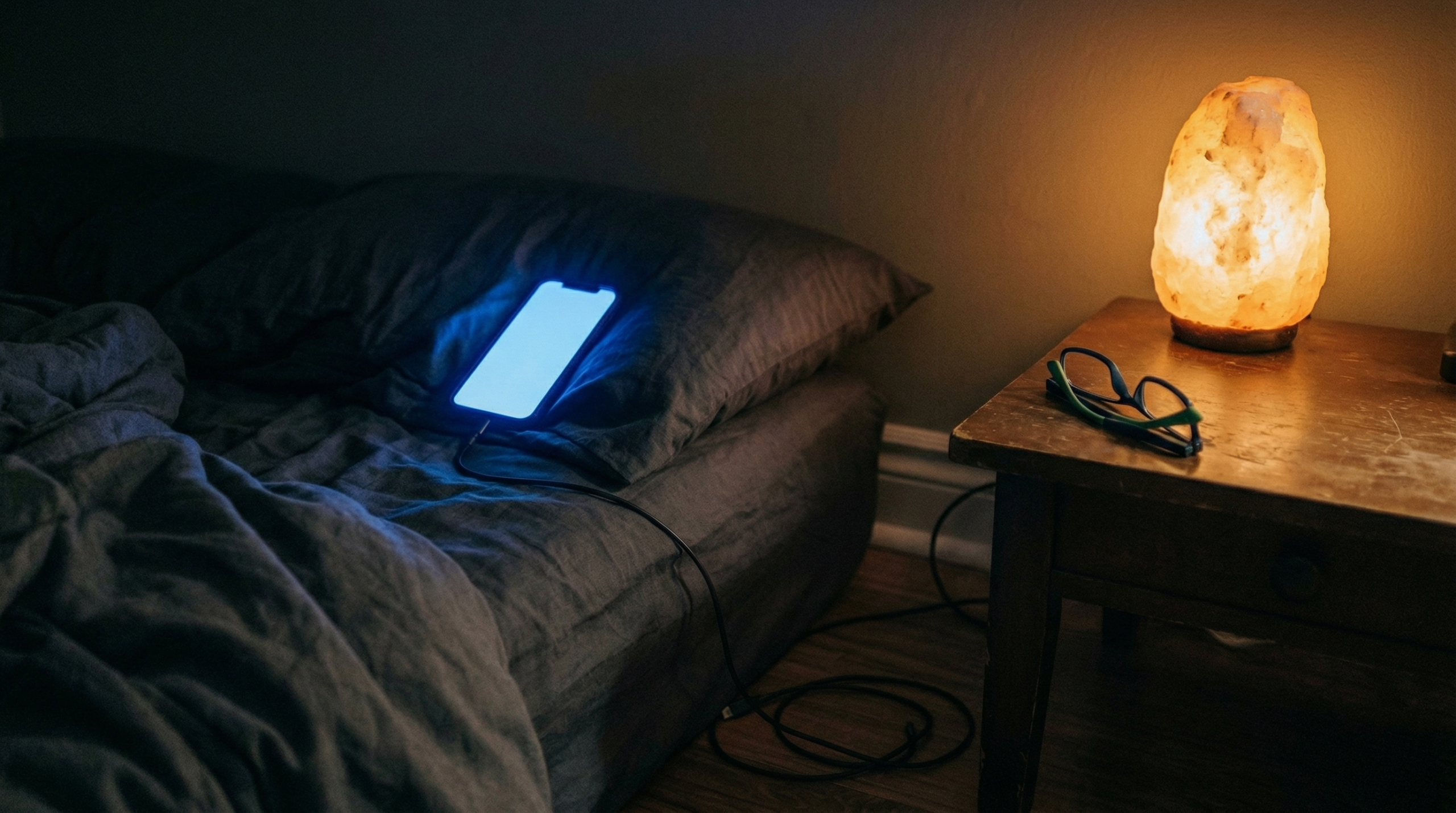
When you look at bright screens or sit under strong indoor lighting late at night, the SCN can interpret this as “daytime” input. This can suppress melatonin, keep core body temperature higher for longer, and delay sleepiness (1,2,3).
Important clarification: “Deep sleep” usually refers to slow-wave sleep (NREM stage 3), while REM sleep is a separate stage associated with memory processing and emotional regulation. Circadian disruption and melatonin suppression may affect overall sleep architecture across the night, including both NREM and REM timing and continuity (2,3).
10 Signs You May Be Experiencing Low or Mistimed Melatonin Signalling
Melatonin is more than a sleep-related hormone; it also has antioxidant activity and interacts with multiple endocrine and immune pathways, including MT1 and MT2 receptor-mediated signalling (6). A disrupted light-dark cycle or delayed dim-light melatonin onset (DLMO) can be associated with the following (1,2,3,6):
| # | Sign | Mechanism / Context |
|---|---|---|
| 1 | Poor sleep quality | Difficulty falling asleep, frequent waking, or early morning awakening associated with delayed melatonin onset (1,2) |
| 2 | Hormonal pattern disruption | Melatonin interacts with estrogen-related pathways and may influence local estrogen synthesis via aromatase activity in some tissues (7,8). See hormonal regulation and circadian rhythm disruption (9) |
| 3 | Higher night-time blood pressure | Melatonin has been studied for its relationship with nocturnal blood pressure regulation and non-dipping hypertension patterns (10,11,12) |
| 4 | Chronic pain sensitivity | Altered melatonin patterns and sleep disruption are commonly observed in fibromyalgia and other chronic pain states (13,14,15) |
| 5 | Thyroid signalling effects | Older endocrine literature suggests melatonin can interact with hypothalamic-pituitary-thyroid (HPT) axis signalling at the central level (9) |
| 6 | Mood changes | Light-at-night (LAN) exposure and circadian disruption are associated with depression and anxiety outcomes in population research, including UK Biobank data (16,17) |
| 7 | Bone remodelling support | Melatonin has been studied for potential roles in osteoblast differentiation and bone formation via RANKL/OPG pathway modulation (18,19) |
| 8 | Breastfeeding rhythm issues | Melatonin and prolactin follow coordinated night-time secretion patterns in lactating women (20) |
| 9 | Increased hunger / weight gain pressure | Sleep restriction and circadian disruption can alter leptin and ghrelin signalling, increasing appetite drive (21,22) |
| 10 | “Brain fog” after poor sleep | Sleep supports glymphatic system clearance of metabolic waste (including beta-amyloid) from the brain (23) |
A “Digital Sunset” Strategy for Adelaide Professionals
Restoring a stronger contrast between bright daytime light and dim evening light can help the circadian system time melatonin onset appropriately — a principle supported by chronobiology research from institutions including Monash University’s Turner Institute for Brain and Mental Health (1,2,3).
1) The 2-Hour Dim-Light Window
Aim for approximately 2 hours of dim light before bed (not just “no phone”). In experimental and real-world studies, evening light exposure — especially from light-emitting devices — can delay circadian timing and suppress melatonin (1,2,3).
2) Reduce Short-Wavelength (“Blue-Enriched”) Light After Sunset
Blue-enriched light (peaking near 460-480 nm) is more likely to suppress melatonin compared with longer wavelengths, based on human action-spectrum research by George Brainard and colleagues at Thomas Jefferson University (4,5).
3) Consider Blue-Blocking Strategies
Some people use amber/blue-blocking glasses or device settings (such as Apple Night Shift or f.lux) to reduce short-wavelength exposure in the evening. These strategies are best used as support — rather than a substitute — for reducing overall brightness and stimulating content at night (3,17).
4) Keep the Bedroom Darker and Simpler
Even small light sources (standby LEDs, hallway light) can signal “daytime” to the circadian system via melanopsin-containing ipRGCs. Prioritise darkness and reduce unnecessary light in the sleep environment (1).
5) Evening Nutrition: Support the Serotonin-to-Melatonin Pathway
Melatonin is synthesised from serotonin via the enzyme arylalkylamine N-acetyltransferase (AANAT). Some people find a small, balanced evening snack helpful — e.g., a tryptophan-containing food (such as turkey, pumpkin seeds, or tart cherry) paired with a small carbohydrate source — to support sleepiness. Individual responses vary, particularly with reflux, blood sugar instability, or night waking (21,22).
6) Morning Outdoor Light Exposure
Natural morning light (ideally 10,000+ lux from outdoor exposure) can help “anchor” circadian timing by advancing the SCN clock phase, supporting earlier melatonin onset the following evening (2).
When to Consider a Circadian Reset (or Clinical Support)
| Warning Sign | What It May Indicate |
|---|---|
| You fall asleep easily but wake unrefreshed or wake repeatedly through the night | Possible circadian misalignment or melatonin rhythm disruption (1,2) |
| You get a “second wind” at night, then struggle to sleep at your intended bedtime | Delayed sleep phase pattern, potentially linked to evening light exposure (2,3) |
| You rely on caffeine to function most mornings, especially after adequate time in bed | Non-restorative sleep despite sufficient sleep duration (1,2) |
| You work late-night shifts or frequently travel across time zones | Shift work disorder or jet lag-related circadian desynchrony (2,16) |
Next Steps
- Start with light: dim your evenings for 7-14 nights and track sleep onset, night waking, and morning energy (1,2).
- Anchor mornings: get outdoor light early where possible, then keep evenings consistently dim (2).
- Pair with basics: regular meal timing, consistent wake time, and a wind-down routine often amplify results (2).
Frequently Asked Questions
Key Insights
- Evening room light and screens can suppress melatonin and shorten the biological “night,” potentially worsening sleep quality (1,2,3)
- Short-wavelength (“blue-enriched”) light is especially potent for melatonin suppression in human studies (4,5)
- Sleep and circadian disruption can influence next-day energy, appetite signalling, blood pressure rhythms, and mood-related outcomes (10,11,12,16,21)
Citable Takeaways
- Ordinary room lighting (~100 lux) before bedtime can delay dim-light melatonin onset (DLMO) and shorten melatonin duration by approximately 90 minutes under controlled conditions (1).
- The melanopsin photopigment in intrinsically photosensitive retinal ganglion cells (ipRGCs) is maximally sensitive to short-wavelength light near 480 nm, making blue-enriched light the most potent melatonin suppressor (4,5).
- Melatonin is synthesised from serotonin via arylalkylamine N-acetyltransferase (AANAT), a rate-limiting enzyme whose activity is regulated by the suprachiasmatic nucleus (SCN) clock (6).
- Sleep restriction and circadian misalignment can alter leptin and ghrelin signalling, increasing appetite drive and potentially contributing to weight gain (21,22).
- Morning outdoor light exposure (10,000+ lux) may help advance circadian phase and support earlier melatonin onset the following evening, according to chronobiology research (2).
- Light-at-night (LAN) exposure is associated with increased risk of depressive symptoms in large population studies, including UK Biobank cohort analyses (16,17).
Restore Your Natural Rhythm
If you’re waking tired or relying on caffeine to get through the day in Adelaide, your light-dark cycle may benefit from a reset. At Elemental Health and Nutrition, we commonly start with circadian basics (morning light, evening dimness, and routine consistency), then personalise the plan around symptoms, lifestyle, and health history — including how sleep may relate to chronic fatigue and non-restorative sleep.
References
- Bhatia M, et al. Allosteric inhibition of MTHFR prevents futile SAM cycling and maintains nucleotide pools in one-carbon metabolism. J Biol Chem. 2020. https://doi.org/10.1074/jbc.RA120.015129
- Goyette P, et al. Gene structure of human and mouse methylenetetrahydrofolate reductase (MTHFR). Mamm Genome. 1998. https://doi.org/10.1007/s003359900838
- Papakostas GI, et al. L-methylfolate as adjunctive therapy for SSRI-resistant major depression. Am J Psychiatry. 2012. https://doi.org/10.1176/appi.ajp.2012.11071114
- Shelton RC, et al. Adjunctive L-methylfolate in major depressive disorder. J Clin Psychiatry. 2013. https://doi.org/10.4088/PCC.13m01520
- Bailey LB, Gregory JF. Folate metabolism and requirements. J Nutr. 1999. https://doi.org/10.1093/jn/129.4.779
- Finkelstein JD. Methionine metabolism in mammals. J Nutr Biochem. 1990. https://doi.org/10.1016/0955-2863(90)90070-2
- Selhub J. Homocysteine metabolism. Annu Rev Nutr. 1999. https://doi.org/10.1146/annurev.nutr.19.1.217
- Bottiglieri T. S-Adenosyl-L-methionine (SAMe): from the bench to the bedside. Mol Aspects Med. 2002. https://doi.org/10.1093/ajcn/76/5.1151S
- Botto LD, Yang Q. 5,10-Methylenetetrahydrofolate reductase gene variants and congenital anomalies. Am J Epidemiol. 2000. https://doi.org/10.1093/oxfordjournals.aje.a010290
- van der Put NMJ, Blom HJ. Neural tube defects and a disturbed folate dependent homocysteine metabolism. Eur J Obstet Gynecol Reprod Biol. 2000. https://doi.org/10.1177/153537020122600402
- McEwen BS. Protective and damaging effects of stress mediators. N Engl J Med. 1998. https://doi.org/10.1056/NEJM199801153380307
- Irwin MR. Sleep and inflammation: partners in sickness and in health. Nat Rev Immunol. 2019. https://doi.org/10.1038/s41577-019-0190-z
- Walker MP. The role of sleep in cognition and emotion regulation. Ann N Y Acad Sci. 2009. https://doi.org/10.1111/j.1749-6632.2009.04416.x
- Weitzel JM, Iwen KA. Coordination of mitochondrial biogenesis by thyroid hormone. Mol Cell Endocrinol. 2011. https://doi.org/10.1016/j.mce.2011.05.009
- Mullur R, Liu YY, Brent GA. Thyroid hormone regulation of metabolism. Physiol Rev. 2014. https://doi.org/10.1152/physrev.00030.2013
- Belizario JE, et al. Gut microbiome dysbiosis and its immunometabolic consequences. Front Immunol. 2018. https://doi.org/10.1155/2018/2037838
- Carding S, Verbeke K, Vipond DT, Corfe BM, Owen LJ. Dysbiosis of the gut microbiota in disease. Microb Ecol Health Dis. 2015. https://doi.org/10.3402/mehd.v26.26191
- McNulty H, et al. Riboflavin lowers blood pressure in MTHFR 677TT individuals. Circulation. 2006. https://doi.org/10.1161/HYPERTENSIONAHA.111.01047