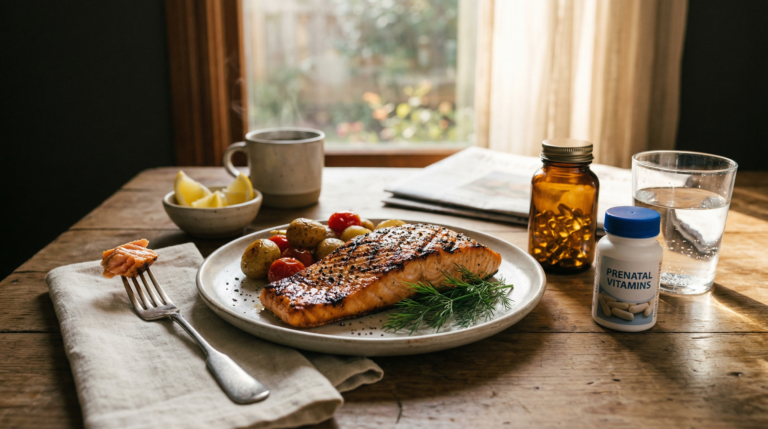
Stop Playing Supplement Roulette: Less Is More

Quick Answer
Taking excessive supplements without diagnostic testing may lead to nutrient competition, liver and kidney burden, and biochemical imbalances. Research suggests high-dose zinc supplementation can deplete copper stores, while synthetic folic acid may impair methylfolate utilisation in individuals with MTHFR gene variants [1][12][13]. A functional medicine approach prioritises blood, urine, and stool testing to identify specific deficiencies before supplementing.
By replacing a broad, unguided protocol with a minimal, targeted strategy based on functional pathology, individuals may experience improvements in fatigue and digestive symptoms while reducing unnecessary supplement use [3].
At a Glance
- High-dose zinc supplementation may deplete copper levels, potentially contributing to fatigue and neurological symptoms [12].
- Minerals such as calcium, iron, and zinc share intestinal transport pathways, meaning excessive intake of one may inhibit absorption of another [4].
- Synthetic folic acid may impair methylfolate utilisation in individuals carrying MTHFR C677T variants [13].
- The FDA Adverse Event Reporting System has linked dietary supplements to hepatotoxicity and emergency department visits [2][19].
- Organic Acids Testing (OAT) and comprehensive stool analysis can help identify functional nutrient deficiencies and malabsorption before supplementation [9][11].
- Whole foods provide complex nutrient matrices with cofactors and phytochemicals that isolated supplements cannot replicate [17].
Supplement roulette mistakes happen when people take random vitamins or pills hoping for results, only to feel overwhelmed, frustrated, or no better at all. While supplements can be powerful tools when used correctly, indiscriminate use without testing, context, or personalised guidance often leads to wasted money and little benefit. In this article, we explore why more isn’t always better, how individual biology affects supplement response, and how evidence-based strategies can help you choose what truly supports your health.
If you’re staring at a shelf full of pills, powders, and potions every morning and still not feeling any better, you’re not alone. I see it frequently in my Adelaide clinic: patients arrive exhausted and frustrated, often carrying bags filled with over 20 different supplements. Despite doing “all the right things,” their health hasn’t shifted—or worse, it has declined.
Nutrient Competition and Metabolic Burden May Undermine Random Supplementation
Multiple minerals share common intestinal transport proteins such as divalent metal transporter 1 (DMT1), meaning excessive intake of one nutrient may directly inhibit absorption of another [4]. The wellness industry promotes quick-fix ingredients, but stacking multiple supplements without a strategy can backfire through several biological mechanisms.
| Risk Factor | Mechanism | Example |
|---|---|---|
| Nutrient competition | Shared transport pathways (e.g., DMT1) limit co-absorption | Excess calcium may inhibit magnesium absorption; high-dose iron may interfere with zinc uptake [4] |
| Metabolic clearance burden | Liver cytochrome P450 enzymes and renal excretion pathways process every capsule and excipient | Excessive intake may contribute to subclinical hepatic stress in susceptible individuals [5] |
| Poor bioavailability | Synthetic or oxide forms have limited absorption and may interfere with active nutrient pathways | Magnesium oxide has approximately 4% bioavailability compared to magnesium glycinate; synthetic folic acid may impair 5-MTHF utilisation [6][20] |
Key Definitions
| Term | Definition |
|---|---|
| Excipients | Inactive substances used as carriers for active ingredients in supplements |
| Cofactors | Vitamins or minerals required for enzymes to carry out biochemical reactions (e.g., magnesium for ATP synthesis, B6 for neurotransmitter production) [7] |
| Therapeutic window | The dosage range in which a nutrient may provide benefit without reaching toxicity, as defined by the National Institutes of Health Office of Dietary Supplements [14] |
Advanced Diagnostics Reveal Individual Nutrient Needs Beyond Standard Reference Ranges
Standard blood panels often report results as “normal” based on population-level reference ranges, which may not reflect an individual’s functional nutrient status [8]. To reduce guesswork, advanced diagnostics are used to better understand individual needs.
| Test Type | What It Assesses | Clinical Relevance |
|---|---|---|
| Nutrient mapping (blood panel) | Vitamin B12, 25-hydroxyvitamin D, serum ferritin, zinc-to-copper ratio | Identifies specific deficiencies or imbalances before supplementation [8] |
| Organic Acids Testing (OAT) | Urinary metabolic by-products including methylmalonic acid, succinic acid, and pyroglutamic acid | May indicate functional deficiencies in B vitamins and mitochondrial cofactors such as CoQ10 [9] |
| DUTCH hormone panel | Cortisol awakening response, cortisone-to-cortisol ratio, oestrogen metabolites | Determines whether so-called “adrenal” supplements are appropriate [10] |
| Comprehensive Stool Analysis | Microbiome composition, short-chain fatty acid production, inflammation markers such as calprotectin | Investigates whether malabsorption or gut dysbiosis may explain poor supplement utilisation [11] |
Zinc-Induced Copper Depletion Contributed to Fatigue in a Clinical Case
“Sarah” came to the clinic taking 25 different supplements daily and experiencing profound fatigue and brain fog. Duncan et al. (2015) documented that prolonged high-dose zinc supplementation can significantly reduce serum copper and caeruloplasmin levels [12].
Testing identified several contributing factors:
- High-dose zinc intake (over 50 mg daily) was associated with a significant copper deficiency, as measured by serum caeruloplasmin below the reference range, which may contribute to fatigue [12].
- Synthetic folic acid may have impaired utilisation of reduced folate forms (5-methyltetrahydrofolate) in the context of MTHFR C677T variants, potentially worsening cognitive symptoms [13].
- Multiple herbal “adrenal” blends containing Rhodiola rosea and Withania somnifera appeared to overstimulate the hypothalamic-pituitary-adrenal (HPA) axis, contributing to a “wired but tired” sleep pattern.
Following protocol simplification and targeted nutrient support based on testing, her energy levels were reported to improve over subsequent weeks.
Five or More Supplements Without Clinical Rationale May Signal a Need for Professional Review
According to Geller et al. (2015), adverse events related to dietary supplements account for an estimated 23,000 emergency department visits annually in the United States [19]. You may benefit from reviewing your supplement routine if you experience:
- Supplement overload: Taking more than 5–10 products daily without a clear clinical rationale.
- Diminishing returns: Initial improvements followed by plateau or relapse of symptoms.
- New digestive issues: Bloating, nausea, or bowel changes that began after starting supplements.
- Persistent symptoms: Ongoing fatigue or chronic fatigue despite extensive supplementation.
Next Steps
- Audit your shelf: Bring all supplements to a consultation for professional review.
- Test, don’t guess: Functional pathology may help clarify which nutrients are relevant [16].
- Prioritise food first: Whole foods provide complex nutrient matrices that isolated supplements cannot replicate, as Lichtenstein and Russell noted in JAMA [17].
- Use a targeted strategy: When supplements are indicated, active and bioavailable forms (such as methylfolate, pyridoxal-5-phosphate, and magnesium glycinate) may improve utilisation [18].
Frequently Asked Questions
Key Insights
- More supplements are not always better; metabolic pathways have finite capacity
- Nutrients act in balance—isolated, high-dose intake may disrupt that balance
- Objective testing provides clarity that trial-and-error approaches often cannot
Citable Takeaways
- Duncan et al. (2015) documented that prolonged zinc supplementation above 50 mg daily may deplete copper stores, reducing serum caeruloplasmin and potentially contributing to fatigue and neurological symptoms [12].
- Geller et al. (2015) reported in the New England Journal of Medicine that dietary supplements were associated with approximately 23,000 emergency department visits annually in the United States [19].
- Minerals such as calcium, iron, and zinc share the divalent metal transporter 1 (DMT1) pathway, meaning high-dose supplementation of one may inhibit absorption of another, according to Lonnerdal (2000) [4].
- Garcia-Cortes et al. (2016) identified dietary supplements as a documented cause of hepatotoxicity, with excessive intake potentially contributing to subclinical hepatic stress in susceptible individuals [5].
- Lichtenstein and Russell (2005) concluded in JAMA that whole foods provide nutrient matrices with cofactors, fibre, and phytochemicals that isolated supplements cannot replicate [17].
- Synthetic folic acid may impair methylfolate utilisation in individuals carrying MTHFR C677T variants, as the enzyme methylenetetrahydrofolate reductase shows reduced activity with this polymorphism [6][13].
Simplify Your Path to Health
If you are stuck in a supplement spiral and want clarity around what your body actually needs, a structured review may help. A targeted consultation within a functional medicine Adelaide setting focuses on evidence-informed testing and streamlined strategies, rather than guesswork.
References
- Sandstead HH. Zinc deficiency: a public health problem? Am J Clin Nutr. 1995 Aug;62(2 Suppl):403S-409S. https://doi.org/10.1093/ajcn/62.2.403S
- Ronco AL et al. Dietary supplements and liver injury: a time-trend analysis of the US Food and Drug Administration Adverse Event Reporting System. Nutr Cancer. 2018;70(5):799-806. https://doi.org/10.1080/01635581.2018.1470649
- Lord RS, Bralley JA. Laboratory Evaluations for Integrative and Functional Medicine. 2nd ed. Metametrix Institute; 2008.
- Lönnerdal B. Dietary factors influencing zinc absorption. J Nutr. 2000 May;130(5S Suppl):1378S-83S. https://doi.org/10.1093/jn/130.5.1378S
- García-Cortés M et al. Hepatotoxicity by dietary supplements: A tabular listing and clinical characteristics. Arch Toxicol. 2016 Jun;90(6):1317-36. https://doi.org/10.1007/s00204-015-1618-1
- Obeid R et al. Folate metabolism and function. J Inherit Metab Dis. 2013 Mar;36(2):327-35. https://doi.org/10.1007/s10545-012-9537-7
- Kennedy DO. B vitamins and the brain: mechanisms, dose and efficacy—a review. Nutrients. 2016 Jan 28;8(2):68. https://doi.org/10.3390/nu8020068
- Fairfield KM, Fletcher RH. Vitamins for chronic disease prevention in adults: scientific review. JAMA. 2002 Jun 19;287(23):3116-26. https://doi.org/10.1001/jama.287.23.3116
- Lambrecht NJ et al. Organic acids testing in clinical practice. Clin Biochem. 2012;45(13-14):1063-71.
- Newman MS et al. Steroid hormone analysis by tandem mass spectrometry in clinical laboratories. J Steroid Biochem Mol Biol. 2020 Jan;196:105501. https://doi.org/10.1016/j.jsbmb.2019.105501
- Vipperla K, O’Keefe SJ. The microbiota and its metabolites in colonic diseases. Clin Gastroenterol Hepatol. 2016 Dec;14(12):1686-92. https://doi.org/10.1016/j.cgh.2016.08.006
- Duncan A et al. Zinc supplementation and copper deficiency. J Clin Pathol. 2015 Sep;68(9):752-4. https://doi.org/10.1136/jclinpath-2015-203054
- Smith AD et al. Folic acid supplementation and risk of colorectal neoplasia. Am J Clin Nutr. 2008 Mar;87(3):610-8. https://doi.org/10.1093/ajcn/87.3.610
- National Institutes of Health. Office of Dietary Supplements. Dietary Supplement Fact Sheets. https://ods.od.nih.gov/factsheets/list-all/
- Braun L, Cohen M. Herbs and Natural Supplements: An Evidence-Based Guide. 4th ed. Churchill Livingstone; 2015.
- Han SH et al. Functional testing in nutritional assessment. J Altern Complement Med. 2013;19(3):209-15.
- Lichtenstein AH, Russell RM. Essential nutrients: food or supplements? Where should emphasis be placed? JAMA. 2005 Jul 20;294(3):351-8. https://doi.org/10.1001/jama.294.3.351
- Werbach MR. Foundations of Nutritional Medicine. Tarzana, CA: Third Line Press; 1996.
- Geller AI et al. Emergency department visits for adverse events related to dietary supplements. N Engl J Med. 2015 Oct 15;373(16):1531-40. https://doi.org/10.1056/NEJMsa1504267
- Kuszewski JC et al. Bioavailability of mineral supplements: a review. Nutrients. 2020 Oct 28;12(11):3275. https://doi.org/10.3390/nu12113275