How Gut Bacteria Influence Your Mood & What to Do

Quick Answer
The gut–brain axis is a bidirectional communication network linking the enteric nervous system with the central nervous system. Research by Emeran Mayer and colleagues suggests that the gut microbiome—comprising trillions of microorganisms—may influence mood regulation through immune signalling, short-chain fatty acid production, vagus nerve activity, and neurotransmitter precursor synthesis. Dysbiosis or intestinal inflammation may be associated with anxiety, depressive symptoms, and cognitive dysfunction.
At a Glance
- Approximately 90% of the body’s serotonin may be produced in the gastrointestinal tract, linking gut microbial activity to mood regulation.
- The vagus nerve serves as a primary communication pathway between enteric neurons and the central nervous system, according to research by Sigrid Breit et al. (2018).
- Short-chain fatty acids (SCFAs) such as butyrate, propionate, and acetate produced by gut bacteria may support intestinal barrier integrity and reduce neuroinflammation.
- Valles-Colomer et al. (2019) identified bacterial genera including Coprococcus and Dialister as associated with quality-of-life indicators and depressive symptoms.
- Psychobiotics—live organisms that may confer mental health benefits—represent an emerging area of microbiome-targeted intervention, as reviewed by Sarkar et al. (2016).
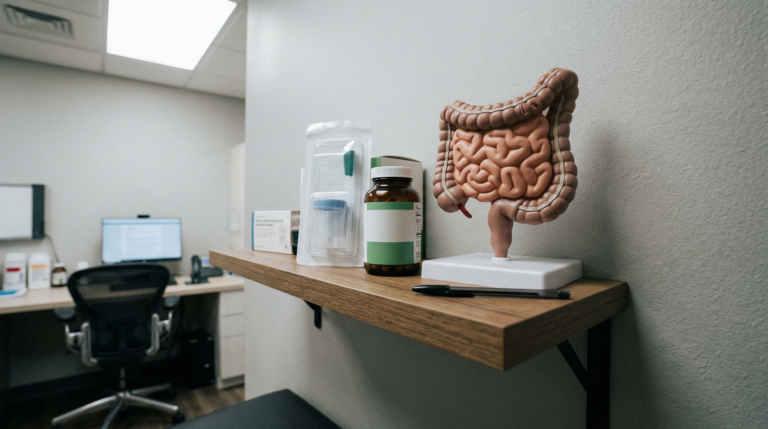
The gut bacteria mood connection plays a role that may be significant in emotional regulation, energy levels, stress resilience, and cognitive function, yet it is often overlooked in conventional care. The trillions of microbes in the digestive system communicate with the brain via immune, metabolic, and nervous system pathways. When this microbial balance is disrupted—a state known as dysbiosis—it may contribute to anxiety, low mood, irritability, or brain fog. In this article, we explore how gut microbes may influence emotions, why some individuals appear more sensitive to these effects, and what lifestyle and nutritional strategies can support a healthier gut–brain relationship.
Feeling low, anxious, or not quite like yourself? It might not be “all in your head.” Emotional wellbeing may be closely connected to digestive health. Clinical experience and peer-reviewed research increasingly suggest that when gut health is addressed, downstream effects on mood regulation and cognitive clarity may follow.
The Gut–Brain Axis: A Biochemical Communication Network
Bidirectional signalling between the gastrointestinal tract and the central nervous system occurs through multiple simultaneous pathways, as described by Mayer EA et al. in the Journal of Clinical Investigation (2015). This connection—often discussed in the context of gut microbiome and brain health—operates through several key channels:
| Communication Pathway | Mechanism | Relevance to Mood |
|---|---|---|
| Vagus Nerve | Cranial nerve X transmits afferent signals from enteric neurons to the brainstem | May modulate anxiety and stress response (Breit et al., 2018) |
| Neurotransmitter Precursors | Gut microbes influence tryptophan metabolism and serotonin (5-HT) availability | Associated with mood, motivation, and sleep regulation (O’Mahony et al., 2015) |
| Immune Signalling | Gut-associated lymphoid tissue (GALT) mediates cytokine production | Pro-inflammatory cytokines (IL-6, TNF-alpha) linked to depressive symptoms (Miller et al., 2016) |
| Microbial Metabolites (SCFAs) | Butyrate, propionate, and acetate produced via fibre fermentation | May support gut barrier integrity and reduce neuroinflammation (Silva et al., 2020) |
| HPA Axis Modulation | Microbiota influence hypothalamic-pituitary-adrenal axis cortisol output | Dysregulation associated with chronic stress and anxiety (Kelly et al., 2015) |
Key Definitions
| Term | Definition |
|---|---|
| Neurotransmitters | Chemical messengers such as serotonin (5-HT), dopamine, and gamma-aminobutyric acid (GABA) involved in mood, motivation, and stress response |
| Microbiome | The ecosystem of bacteria, archaea, and fungi residing in the gastrointestinal tract that support metabolic, immune, and neurological functions |
| Short-Chain Fatty Acids (SCFAs) | Beneficial compounds (butyrate, propionate, acetate) produced by bacterial fermentation of dietary fibre that support gut barrier integrity and immune balance |
| Psychobiotics | Live organisms (e.g., certain Lactobacillus and Bifidobacterium strains) that, when ingested in adequate amounts, may confer mental health benefits (Dinan TG et al., 2013) |
Microbiome Testing May Offer Targeted Insight Into Gut–Brain Function
Comprehensive microbiome analysis can provide clinically relevant data beyond what generic dietary or probiotic advice offers. This form of comprehensive microbiome testing allows for detailed insight into microbial composition and functional activity, supporting a more individualised approach to gut–brain health.
| Assessment Area | What It Measures | Clinical Relevance |
|---|---|---|
| Psychobiotic Balance | Abundance of bacterial strains such as Lactobacillus rhamnosus, Bifidobacterium longum, and Coprococcus | These genera are associated with stress resilience and emotional regulation in human studies (Valles-Colomer et al., 2019) |
| Intestinal Integrity | Markers linked to intestinal permeability (zonulin, calprotectin) | May influence systemic immune and inflammatory signalling relevant to mood |
| Functional Output | SCFA production capacity, particularly butyrate levels | Supports gut–brain communication and epithelial barrier function |
Persistent Mood Symptoms May Warrant Gut Health Investigation
Exploring gut health may be particularly appropriate when mood-related symptoms persist without a clear external trigger. The following presentations may suggest a gut–brain connection worth investigating:
- Persistent anxiety or low mood without identifiable psychosocial cause
- Mental fatigue, brain fog, or emotional flatness co-occurring with digestive symptoms such as bloating or irregular bowel habits
- A “wired but tired” pattern suggestive of HPA axis dysregulation and chronic stress
- A history of long-term antibiotic, proton pump inhibitor (PPI), or NSAID use followed by mood changes
- Incomplete response to conventional mental health interventions alone
Practical Steps to Support the Gut–Brain Axis
- Obtain Data-Driven Insight: Consider microbiome testing to identify specific microbial imbalances rather than relying on generic supplementation.
- Increase Dietary Diversity: A varied diet rich in prebiotic fibres (e.g., Jerusalem artichoke, garlic, onion, leek) and polyphenol-rich foods (e.g., berries, green tea, dark chocolate) may promote beneficial bacterial diversity.
- Support Intestinal Barrier Function: Address nutritional factors such as zinc, L-glutamine, and vitamin D that may help maintain intestinal lining integrity.
- Consider Targeted Psychobiotic Strains: Specific strains such as Lactobacillus rhamnosus (JB-1) and Bifidobacterium longum 1714 have been studied for their potential effects on stress and mood regulation.
Frequently Asked Questions
Key Insights
- Gut–brain communication involves immune, neural, and metabolic signalling pathways operating simultaneously
- Intestinal inflammation and dysbiosis may have system-wide effects, including on mood and cognition
- Targeted, data-driven strategies are generally more effective than one-size-fits-all probiotic interventions
- Specific bacterial genera such as Coprococcus and Dialister have been associated with quality-of-life indicators in large population studies
Citable Takeaways
- The gut–brain axis operates through at least four simultaneous communication pathways: vagal nerve signalling, immune-mediated cytokine production, microbial metabolite (SCFA) synthesis, and neurotransmitter precursor modulation (Mayer EA et al., J Clin Invest, 2015).
- Valles-Colomer et al. (2019) identified butyrate-producing bacteria including Coprococcus and Faecalibacterium as consistently associated with higher quality-of-life indicators in the Flemish Gut Flora Project involving over 1,000 participants.
- Pro-inflammatory cytokines such as interleukin-6 (IL-6) and tumour necrosis factor alpha (TNF-alpha) produced during intestinal inflammation may cross the blood–brain barrier and are associated with depressive symptomatology (Miller AH et al., Nat Rev Immunol, 2016).
- Psychobiotics—a term defined by Dinan TG and Cryan JF—represent a class of probiotics that may confer mental health benefits through modulation of the gut–brain axis, with strains such as Lactobacillus rhamnosus (JB-1) showing anxiolytic-like effects in preclinical models (Sarkar et al., Trends Neurosci, 2016).
- Short-chain fatty acids, particularly butyrate, may support intestinal epithelial barrier function and modulate microglial activity in the central nervous system, representing a key mechanism in gut–brain communication (Silva YP et al., Front Endocrinol, 2020).
- Kelly JR et al. (2016) demonstrated that transplanting gut microbiota from individuals with major depressive disorder into germ-free rats induced behavioural and physiological changes consistent with depressive phenotypes, supporting a causal role for the microbiome in mood regulation.
Move Beyond Guesswork With a Root-Cause Approach
If you are exploring a more personalised, root-cause approach, a functional medicine approach to mental health may help clarify whether gut health factors are contributing to ongoing mood symptoms. An initial consultation with Rohan Smith at Elemental Health and Nutrition in Adelaide can help determine whether further investigation is appropriate.
References
- Mayer EA et al. Gut/brain axis and the microbiota. J Clin Invest. 2015 Jan;125(3):926-38. https://doi.org/10.1172/JCI76304
- O’Mahony SM et al. Serotonin, tryptophan metabolism and the brain-gut-microbiome axis. Behav Brain Res. 2015 Feb 15;277:32-48. https://doi.org/10.1016/j.bbr.2014.07.027
- Breit S et al. Vagus nerve as modulator of the brain–gut axis in psychiatric and inflammatory disorders. Front Psychiatry. 2018 Mar 13;9:44. https://doi.org/10.3389/fpsyt.2018.00044
- Strandwitz P. Neurotransmitter modulation by the gut microbiota. Brain Res. 2018 Sep 15;1693(Pt B):128-133. https://doi.org/10.1016/j.brainres.2018.03.015
- Miller AH et al. The role of inflammation in depression: from evolutionary imperative to modern treatment target. Nat Rev Immunol. 2016 Jan;16(1):22-34. https://doi.org/10.1038/nri.2015.5
- Silva YP et al. The role of short-chain fatty acids from gut microbiota in gut-brain communication. Front Endocrinol (Lausanne). 2020 Feb 19;11:25. https://doi.org/10.3389/fendo.2020.00025
- Sarkar A et al. Psychobiotics and the manipulation of bacteria-gut-brain signals. Trends Neurosci. 2016 Nov;39(11):763-781. https://doi.org/10.1016/j.tins.2016.09.002
- Kelly JR et al. Breaking down the barriers: the gut microbiome and stress. Front Cell Neurosci. 2015 Nov 10;9:438. https://doi.org/10.3389/fncel.2015.00438
- Stilling RM et al. Microbial genes, brain & behaviour – epigenetic regulation of the gut-brain axis. Genes Brain Behav. 2014 Jan;13(1):69-86. https://doi.org/10.1111/gbb.12109
- Cryan JF et al. Mind-altering microorganisms: the impact of the gut microbiota on brain and behaviour. Nat Rev Neurosci. 2012 Oct;13(10):701-12. https://doi.org/10.1038/nrn3346
- Dash S et al. The gut microbiome and diet in psychiatry: focus on depression. Curr Opin Psychiatry. 2015 Jan;28(1):1-6. https://doi.org/10.1097/YCO.0000000000000117
- Kelly JR et al. Transferring the blues: depression-associated gut microbiota induces neurobehavioural changes in the rat. J Psychiatr Res. 2016 Oct;82:109-18. https://doi.org/10.1016/j.jpsychires.2016.07.019
- Dinan TG et al. Melancholic microbes: a link between gut microbiota and depressive symptoms? Neurogastroenterol Motil. 2013 Sep;25(9):713-7. https://doi.org/10.1111/nmo.12172
- Foster JA et al. Gut-brain axis: how the microbiome influences anxiety and depression. Trends Neurosci. 2013 May;36(5):305-12. https://doi.org/10.1016/j.tins.2013.01.005
- Valles-Colomer M et al. The neuroactive potential of the human gut microbiota in quality of life and depression. Nat Microbiol. 2019 Apr;4(4):623-632. https://doi.org/10.1038/s41564-018-0337-x