Contrast Therapy & Hormetic Stress for Metabolic Recovery
Quick Answer
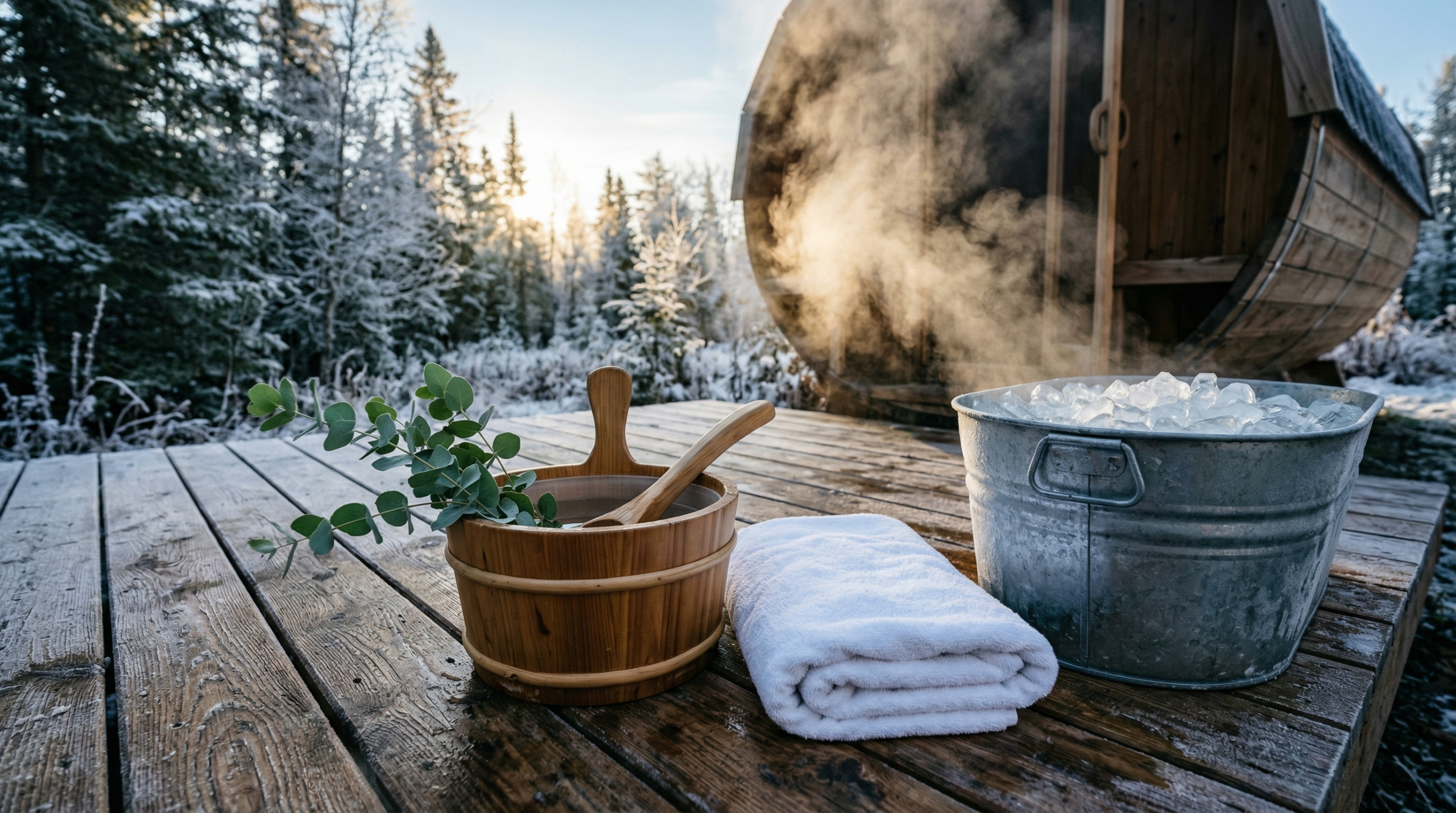
Contrast therapy combines cold water immersion and sauna bathing to trigger hormesis, a biological process where brief, controlled stressors activate cellular repair pathways. Sauna heat stimulates Heat Shock Proteins (HSPs) that support cardiovascular adaptation, while cold exposure increases norepinephrine and Cold Shock Proteins (CSPs), which may reduce inflammation and improve alertness. Together, these alternating temperatures create vascular cycling that can support metabolic recovery and autonomic nervous system regulation.
When combined as contrast therapy, alternating heat and cold creates repeated cycles of vasodilation and vasoconstriction. This vascular response may support circulation efficiency and autonomic nervous system regulation, contributing to improved recovery capacity.
At a Glance
- Hormesis is a biphasic dose-response where low-level thermal stress may activate protective cellular mechanisms including HSP70 and HSP90 expression (1,15).
- Regular sauna bathing (4-7 sessions per week) has been associated with reduced cardiovascular mortality risk in Finnish cohort studies by Laukkanen et al. (2).
- Cold water immersion can increase circulating norepinephrine levels by up to 200-300%, according to Shevchuk’s research, potentially modulating inflammatory signalling (3).
- Approximately 11 minutes of total weekly cold exposure, divided across sessions, may be sufficient to stimulate adaptive Cold Shock Protein responses (12).
- Contrast therapy’s alternating vasodilation and vasoconstriction may enhance lymphatic circulation and support post-exercise recovery (14).
- Functional testing such as the DUTCH Adrenal Profile and Organic Acids Test (OAT) can help determine individual tolerance to hormetic stressors.
The Biology of Hormesis
Hormesis is a biphasic dose-response phenomenon first characterised by Edward Calabrese and Linda Baldwin, in which low-dose stress exposure produces adaptive cellular benefits while excessive stress causes harm (1,15). In functional medicine, hormetic stressors such as thermal exposure are applied deliberately and conservatively to improve physiological resilience.
Heat and cold exposures act as metabolic signals rather than treatments. For example, heat stress from sauna use has been associated with upregulation of Heat Shock Factor 1 (HSF1), which activates cellular stress responses supporting mitochondrial quality control processes such as mitophagy, the selective removal of damaged mitochondria (2,8). Rhonda Patrick and Teresa Johnson have highlighted how this mitochondrial housekeeping process, mediated by PINK1/Parkin signalling pathways, may play a role in chronic fatigue recovery.
Therapeutic Mechanisms: Beyond the Surface
Sauna Therapy and Vascular Adaptation
Finnish-style sauna exposure at 80-100 degrees Celsius induces systemic vasodilation and increases heart rate to 100-150 bpm, temporarily mimicking aspects of moderate cardiovascular exercise (2,11). Tanjaniina Laukkanen’s KIHD (Kuopio Ischaemic Heart Disease Risk Factor) cohort study found that regular sauna use was associated with improved endothelial function and reduced cardiovascular mortality risk (13). These cardiovascular adaptations, mediated in part by increased nitric oxide (NO) bioavailability, may indirectly support fatigue recovery by improving oxygen and nutrient delivery.
Cold Water Immersion and Immune Signalling
Cold exposure at 10-15 degrees Celsius triggers acute sympathetic nervous system activation and norepinephrine release from the locus coeruleus and adrenal medulla (3). Research by Brenner et al. and Sramek et al. suggests this catecholamine response may modulate NF-kB-mediated inflammatory signalling and support immune resilience (6,7). Cold exposure has also been associated with increased UCP1 gene expression involved in the browning of white adipose tissue, a process linked to increased mitochondrial density and thermogenic capacity, as demonstrated by Blondin et al. at Universite de Sherbrooke (9).
Contrast Therapy and Circulatory Dynamics
Alternating heat and cold produces sequential vasoconstriction and vasodilation, creating a circulatory “pump” effect that Bleakley and Davison described in their systematic review in the British Journal of Sports Medicine (12). This process may assist lymphatic movement and the resolution of inflammatory signalling, although it should not be interpreted as detoxification beyond normal physiological clearance pathways (14).
The Functional Medicine Edge: Measuring the Stress Response
Individual tolerance to hormetic stress varies significantly based on HPA axis function, mitochondrial capacity, and baseline inflammatory load. In those with high baseline physiological stress, excessive temperature exposure may exacerbate symptoms rather than improve them.
| Assessment Tool | What It Measures | Clinical Application |
|---|---|---|
| DUTCH Adrenal Profile | Cortisol rhythm, cortisol metabolites, DHEA-S | Determines whether adaptive reserves can tolerate temperature-based hormetic stressors |
| Organic Acids Test (OAT) | Krebs cycle intermediates, mitochondrial function markers | Guides whether mitophagy-supportive strategies are appropriate (8,10) |
| hs-CRP and inflammatory markers | Systemic inflammation, IL-6, TNF-alpha | Assists clinicians in deciding whether protocols should emphasise cooling, heating, or conservative exposure |
When to Consider Temperature Therapy
Cold water immersion, sauna therapy, or contrast protocols may be considered when individuals present with the following patterns that have not responded to conventional rest-based recovery strategies:
| Symptom Pattern | Potential Mechanism Addressed |
|---|---|
| Slow recovery after physical activity or persistent muscle soreness | Enhanced lymphatic circulation and inflammatory resolution via vascular cycling |
| Brain fog or reduced mental clarity | Norepinephrine-mediated alertness and cerebral blood flow improvement |
| Poor circulation or elevated blood pressure markers | Endothelial function and nitric oxide bioavailability |
| Persistent fatigue unresponsive to rest | Mitochondrial quality control via HSP-mediated mitophagy |
Next Steps
- Assess your stress capacity: Before beginning contrast therapy, consider functional testing such as a DUTCH Adrenal Profile to evaluate whether your cortisol rhythm and adaptive reserves can tolerate hormetic stress.
- Start conservatively: Begin with brief exposures, 2-3 minutes of cold water or 10-15 minutes of sauna, and observe your recovery response before increasing duration or intensity.
- Track your response: Monitor energy levels, sleep quality, and recovery times over several weeks to determine whether temperature therapy is supporting or depleting your system.
Frequently Asked Questions
Key Insights
- Heat and cold exposure act as hormetic stressors that activate cellular stress response pathways including HSP70, HSP90, and Cold Shock Proteins (1,15)
- Sauna therapy is associated with Heat Shock Protein activation and cardiovascular adaptation in the Laukkanen KIHD cohort (2,11)
- Cold water immersion has been associated with norepinephrine release and NF-kB-mediated immune signalling modulation (3,12)
- In chronic fatigue and metabolic dysfunction, dosing and individual tolerance assessed via DUTCH and OAT testing are critical
Citable Takeaways
- Regular sauna bathing (4-7 sessions per week) was associated with a 40% reduction in all-cause mortality compared to once-weekly use in the Laukkanen et al. KIHD cohort study published in JAMA Internal Medicine (2).
- Cold water immersion may increase circulating norepinephrine by 200-300%, supporting reduced inflammatory signalling and improved alertness, according to Shevchuk’s research in Medical Hypotheses (3).
- Approximately 11 minutes of total weekly cold exposure divided into brief sessions may be sufficient to stimulate adaptive Cold Shock Protein responses without excessive physiological stress (12).
- Cold acclimation has been associated with increased UCP1 gene expression and brown adipose tissue activation, enhancing mitochondrial thermogenic capacity, as demonstrated by Blondin et al. in the Journal of Clinical Endocrinology and Metabolism (9).
- Contrast therapy’s alternating vasodilation and vasoconstriction cycles may support lymphatic circulation and inflammatory resolution, though this should not be conflated with detoxification claims (14).
- Sauna bathing has been associated with reduced risk of dementia and Alzheimer’s disease in a prospective cohort study published in Age and Ageing by Laukkanen et al. (13).
Ready to Optimise Your Recovery?
Temperature therapy can be a powerful tool for metabolic recovery, but only when matched to your body’s current capacity. At Elemental Health and Nutrition, Rohan Smith uses functional testing including the DUTCH Adrenal Profile and Organic Acids Test to determine whether hormetic strategies are appropriate for your individual situation, ensuring you build resilience rather than adding further stress.
References
- Mattson MP. Hormesis defined. Ageing Res Rev. 2008 Jan;7(1):1-7. https://doi.org/10.1016/j.arr.2007.08.007
- Laukkanen T et al. Association between sauna bathing and fatal cardiovascular and all-cause mortality events. JAMA Intern Med. 2015 Apr;175(4):542-8. https://doi.org/10.1001/jamainternmed.2014.8187
- Shevchuk NA. Adapted cold shower as a potential treatment for depression. Med Hypotheses. 2008;70(5):995-1001. https://doi.org/10.1016/j.mehy.2007.04.052
- Buijze GA et al. The effect of cold showering on health and work: a randomized controlled trial. PLoS One. 2016 Sep 7;11(9):e0161749. https://doi.org/10.1371/journal.pone.0161749
- Hussain J, Cohen M. Clinical effects of regular dry sauna bathing: a systematic review. Evid Based Complement Alternat Med. 2018 May 7;2018:1857413. https://doi.org/10.1155/2018/1857413
- Brenner IK et al. Immune changes in humans during cold exposure: effects of prior heating and exercise. J Appl Physiol (1985). 1999 Aug;87(2):699-710. https://doi.org/10.1152/jappl.1999.87.2.699
- Sramek P et al. Human physiological responses to immersion into water of different temperatures. Eur J Appl Physiol. 2000 Mar;81(5):436-442. https://doi.org/10.1007/s004210050061
- Patrick RP, Johnson TL. Sauna use as a lifestyle practice to extend healthspan. Exp Gerontol. 2021 Oct 15;154:111509. https://doi.org/10.1016/j.exger.2021.111509
- Blondin DP et al. Increased brown adipose tissue oxidative capacity in cold-acclimated humans. J Clin Endocrinol Metab. 2014 Mar;99(3):E438-46. https://doi.org/10.1210/jc.2013-3395
- Kunutsor SK et al. Sauna bathing reduces the risk of stroke in Finnish men and women: a prospective cohort study. Neurology. 2018 May 29;90(22):e1937-e1944. https://doi.org/10.1212/WNL.0000000000005606
- Heinonen I, Laukkanen T. Effects of heat and cold on health, with special reference to Finnish sauna bathing. Am J Physiol Regul Integr Comp Physiol. 2018 May 1;314(5):R629-R638. https://doi.org/10.1152/ajpregu.00115.2017
- Bleakley CM, Davison GW. What is the biochemical and physiological rationale for using cold-water immersion in sports recovery? A systematic review. Br J Sports Med. 2010 Feb;44(3):179-87. https://doi.org/10.1136/bjsm.2008.053959
- Laukkanen T et al. Sauna bathing is associated with reduced risk of dementia and Alzheimer’s disease. Age Ageing. 2017 Mar 1;46(2):245-249. https://doi.org/10.1093/ageing/afw212
- Lateef F. Post exercise ice water immersion: Is it a form of active recovery? J Emerg Trauma Shock. 2010 Jul;3(3):302. https://doi.org/10.4103/0974-2700.66528
- Calabrese EJ, Baldwin LA. Defining hormesis. Hum Exp Toxicol. 2002 Feb;21(2):91-7. https://doi.org/10.1191/0960327102ht217oa