
Adrenal Testing Adelaide: HPA Axis Dysregulation
Quick Answer
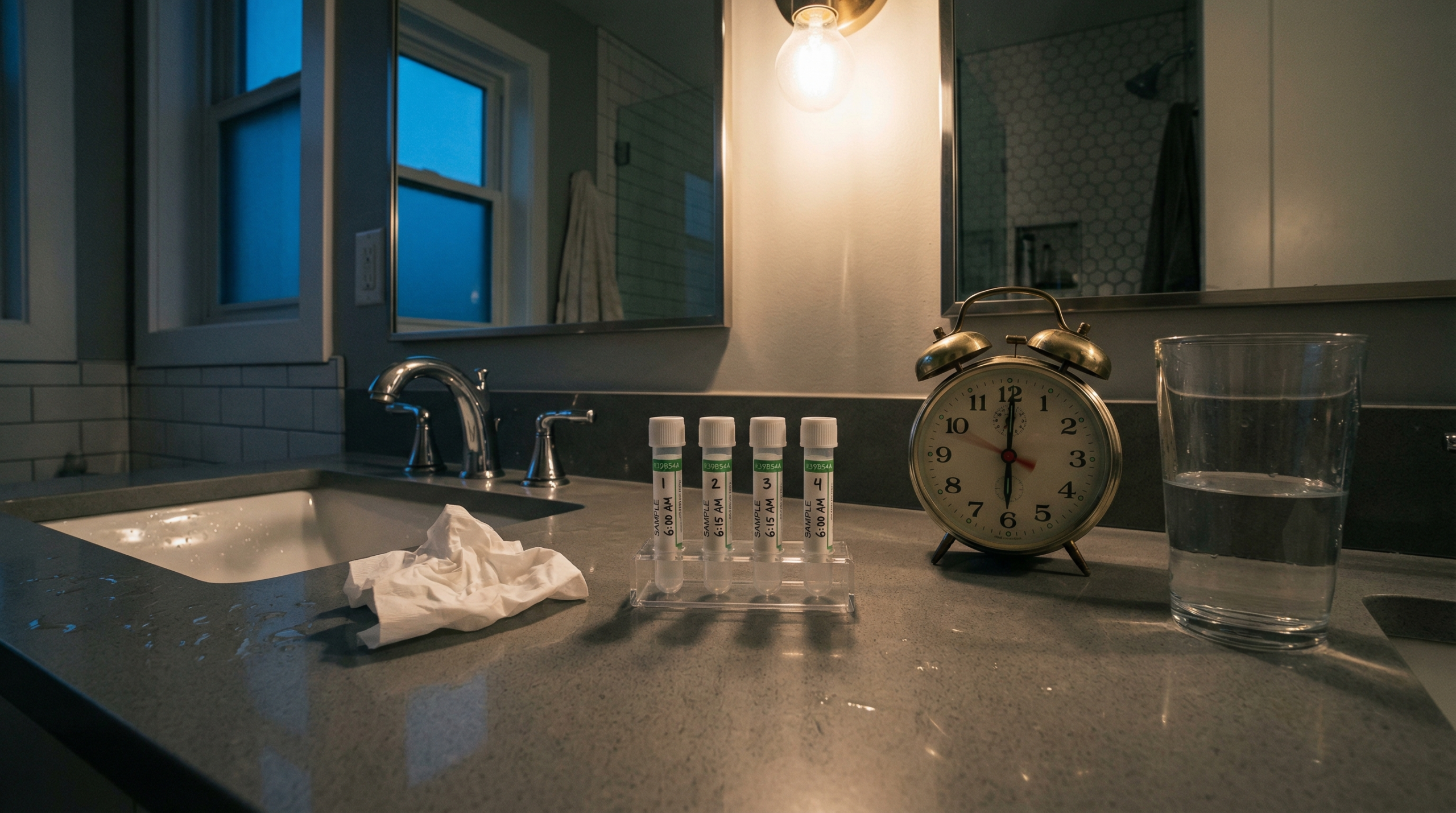
Adrenal testing evaluates the pattern, timing, and balance of cortisol and DHEA-S output across a full 24-hour cycle using saliva or dried urine methods such as the DUTCH Complete test. Unlike single-point blood draws, functional adrenal testing may assess the Cortisol Awakening Response (CAR) and the diurnal cortisol slope, helping to identify whether the HPA axis is trending toward hyper-arousal, suppression, or circadian dysregulation (1,2,3,15).
This approach can help identify whether the stress system is trending toward hyper-arousal (elevated cortisol), suppression (low cortisol), or circadian dysregulation, allowing nutrient and lifestyle strategies to be aligned with the individual’s physiological pattern rather than applied generically (4,10).
At a Glance
- The Cortisol Awakening Response (CAR) involves a 35-50% rise in cortisol within 30 minutes of waking and is considered one of the most reliable markers of HPA axis integrity (3,11).
- Most adrenal concerns reflect hypothalamic-pituitary-adrenal (HPA) axis dysregulation rather than primary adrenal gland failure, as described by Bruce McEwen’s allostatic load model (1,5,10).
- The DUTCH Complete test (Precision Analytical) measures cortisol metabolites, organic acids, and sex hormones via dried urine, offering a more comprehensive view than blood or saliva alone (7,14).
- DHEA-S functions as an anabolic counter-regulatory hormone that may support immune balance and stress adaptation during prolonged HPA axis activation (8,13).
- Physiological HPA axis recovery may take 3 to 9 months depending on severity, stress duration, and lifestyle interventions (2,11).
A Functional Approach to HPA Axis Dysregulation
The hypothalamic-pituitary-adrenal (HPA) axis is a neuroendocrine cascade that regulates cortisol secretion from the adrenal cortex in response to physical and psychological stress. For patients in Adelaide experiencing the familiar “wired but tired” pattern, standard morning blood cortisol tests often fail to capture the full picture. At Elemental Health and Nutrition, we move beyond the oversimplified and outdated concept of “adrenal fatigue” to assess the Hypothalamic-Pituitary-Adrenal (HPA) axis as a regulated stress-response system.
Understanding how your cortisol rhythm behaves across the day is often the first step toward addressing the biological impact of chronic stress and burnout. As highlighted by Mucke et al. (2018) in their systematic review published in BMC Endocrine Disorders, the term “adrenal fatigue” does not meet current diagnostic criteria, reinforcing the need for evidence-based HPA axis assessment (15).
The Science of the HPA Axis and Allostatic Load
Bruce McEwen’s landmark 1998 research in the New England Journal of Medicine established that prolonged stress exposure leads the brain to alter adrenal signalling through a process called allostatic load, which represents the cumulative physiological cost of chronic stress adaptation (5). The hypothalamus releases corticotropin-releasing hormone (CRH), which signals the anterior pituitary to secrete adrenocorticotropic hormone (ACTH), ultimately stimulating cortisol production from the adrenal cortex (6).
Because this regulation occurs from the top down, many so-called “adrenal issues” are better understood as brain-to-gland communication shifts rather than primary gland failure. Advanced adrenal testing can provide insight into several key markers:
| Marker | What It Measures | Clinical Significance |
|---|---|---|
| Cortisol Awakening Response (CAR) | 35-50% cortisol rise within 30 minutes of waking | A flattened CAR has been consistently associated with burnout, chronic fatigue syndrome, and reduced stress resilience (3,11) |
| Metabolised Cortisol | Total cortisol production vs. free (biologically active) cortisol | Indicates cortisol clearance rate and downstream hepatic metabolism, as validated by Newman et al. (2016) (7,12) |
| DHEA-S Levels | Anabolic counter-regulatory hormone from the adrenal zona reticularis | May support immune balance, tissue repair, and stress adaptation during prolonged HPA axis demand (8,13) |
Testing Methods: Saliva vs. DUTCH (Urine)
Dirk Hellhammer and colleagues demonstrated in their 2009 Psychoneuroendocrinology review that salivary cortisol is a validated, non-invasive biomarker for stress research, establishing the foundation for functional adrenal assessment in clinical practice (1). At our Adelaide clinic, two primary testing methods are used for adrenal assessment:
| Testing Method | Sample Type | Key Markers | Best For |
|---|---|---|---|
| Salivary Cortisol Testing | Saliva (4-point collection) | Free cortisol, CAR, diurnal rhythm | Circadian rhythm integrity and free cortisol measurement (1,9) |
| DUTCH Complete (Precision Analytical) | Dried urine | Cortisol metabolites, organic acids, sex hormones, melatonin | Overall cortisol production, clearance, and downstream metabolic effects (7,14) |
The DUTCH Complete test developed by Precision Analytical offers a comprehensive assessment that includes cortisol metabolites, organic acids, and sex hormone balance. Emma Adam and Meena Kumari’s 2009 research further validated salivary cortisol assessment for large-scale epidemiological research (9).
The Functional Medicine Edge: Beyond Stress Management
Cortisol dysregulation rarely occurs in isolation, and a functional medicine approach considers interconnected physiological systems that may amplify HPA axis dysfunction. When cortisol regulation is disrupted, we also assess for underlying stress amplifiers, including:
| Stress Amplifier | Mechanism | Assessment Approach |
|---|---|---|
| Neuro-inflammation | Pro-inflammatory cytokines (IL-6, TNF-alpha) may activate the HPA axis via hypothalamic CRH release | Organic acid testing to identify metabolic or neurotransmitter stress patterns |
| Blood Sugar Dysregulation | Cortisol plays a central role in gluconeogenesis; refined carbohydrate intake may repeatedly activate the HPA axis to stabilise glucose levels (4,8) | Fasting glucose, HbA1c, and insulin assessment |
| Gut Health Stressors | Increased intestinal permeability and lipopolysaccharide (LPS) endotoxin exposure may keep the stress response in a heightened state, as demonstrated by Sudo et al. (2004) (14,15) | Comprehensive stool analysis and zonulin testing |
Next Steps
- Assess your cortisol pattern: Book a functional adrenal assessment using salivary cortisol or DUTCH testing to map your full-day cortisol rhythm and Cortisol Awakening Response.
- Identify underlying amplifiers: Explore whether blood sugar dysregulation, gut health stressors, or neuro-inflammation are contributing to HPA axis dysfunction.
- Align interventions to your pattern: Work with a practitioner to match nutrient, adaptogen, and lifestyle strategies to your specific cortisol profile rather than applying generic stress-management approaches.
Frequently Asked Questions
Key Insights
- Most adrenal concerns reflect HPA axis dysregulation, not adrenal gland failure (1,10).
- The Cortisol Awakening Response is one of the most reliable markers of stress system resilience (3,11).
- Differentiating free versus metabolised cortisol is essential for accurate interpretation (7,14).
- Recovery often overlaps with broader support for chronic fatigue and burnout and circadian rhythm restoration (4,15).
Citable Takeaways
- A normal Cortisol Awakening Response (CAR) involves a 35-50% rise in cortisol within 30 minutes of waking, and a flattened CAR is associated with burnout and chronic fatigue, according to Fries et al. (2009) in the International Journal of Psychophysiology (3).
- The DUTCH Complete test by Precision Analytical measures cortisol metabolites via dried urine, providing insight into total cortisol production and clearance that serum tests cannot capture, as validated by Newman et al. (2016) in BMC Endocrine Disorders (7).
- Allostatic load, as defined by Bruce McEwen (1998), represents the cumulative physiological cost of chronic stress and may manifest as altered HPA axis signalling rather than primary adrenal gland failure (5).
- Mucke et al. (2018) confirmed through systematic review in BMC Endocrine Disorders that “adrenal fatigue” does not meet current diagnostic criteria, supporting the use of HPA axis dysregulation as the evidence-based framework (15).
- Sudo et al. (2004) demonstrated in the Journal of Physiology that postnatal microbial colonisation programs the HPA axis for stress response, linking gut health to adrenal function (14).
- DHEA-S serves as an anabolic counter-regulatory hormone that may support immune balance and tissue repair during prolonged HPA axis activation, as reviewed by Kirschbaum and Hellhammer (1994) in Neuropsychobiology (8).
Move Beyond Burnout
Burnout and chronic fatigue do not have to become permanent states. At Elemental Health and Nutrition, Rohan Smith (BHSc Nutritional Medicine) provides advanced adrenal testing and clinical interpretation to support stress system recovery and long-term resilience. If you are seeking functional support for HPA axis dysregulation, chronic fatigue, or burnout in Adelaide, we can guide your next steps.
References
- Hellhammer DH et al. Salivary cortisol as a biomarker in stress research. Psychoneuroendocrinology. 2009 Feb;34(2):163-71. https://doi.org/10.1016/j.psyneuen.2008.10.026
- Chrousos GP. Stress and disorders of the stress system. Nat Rev Endocrinol. 2009 Jul;5(7):374-81. https://doi.org/10.1038/nrendo.2009.106
- Fries E et al. The cortisol awakening response (CAR): facts and future directions. Int J Psychophysiol. 2009 Apr;72(1):67-73. https://doi.org/10.1016/j.ijpsycho.2008.12.014
- Epel ES et al. Stress may add bite to appetite in women: a laboratory study of stress-induced cortisol and eating behavior. Psychoneuroendocrinology. 2001 Nov;26(8):789-800. https://doi.org/10.1016/S0306-4530(01)00035-4
- McEwen BS. Protective and damaging effects of stress mediators. N Engl J Med. 1998 Jan 15;338(3):171-9. https://doi.org/10.1056/NEJM199801153380307
- Juster RP et al. Allostatic load biomarkers of chronic stress and impact on health and cognition. Neurosci Biobehav Rev. 2010 Sep;35(1):2-16. https://doi.org/10.1016/j.neubiorev.2009.10.002
- Newman M et al. Evaluating urinary cortisol and its metabolites using dried urine testing: validation and clinical utility. BMC Endocr Disord. 2016 Oct 4;16(1):55. https://doi.org/10.1186/s12902-016-0136-5
- Kirschbaum C, Hellhammer DH. Salivary cortisol in psychobiological research: an overview. Neuropsychobiology. 1994;30(2-3):63-9. https://doi.org/10.1159/000119170
- Adam EK, Kumari M. Assessing salivary cortisol in large-scale, epidemiological research. Psychoneuroendocrinology. 2009 Nov;34(10):1423-36. https://doi.org/10.1016/j.psyneuen.2009.06.011
- Head KA, Kelly GS. Nutrients and Botanicals for treatment of stress: adrenal fatigue, neurotransmitter imbalance, anxiety, and restless sleep. Altern Med Rev. 2009 Jun;14(2):114-40. https://pubmed.ncbi.nlm.nih.gov/19594223/
- Powell DJ et al. The cortisol awakening response, chronic stress and health: a systematic review. Health Psychol Rev. 2013;7(1):1-25. https://doi.org/10.1080/17437199.2011.591062
- Guilliams TG, Edwards L. The role of the HPA axis in chronic fatigue syndrome. J Clin Med. 2010;3(1):1-12.
- Panossian A, Wikman G. Effects of adaptogens on the central nervous system and the molecular mechanisms associated with their stress-protective activity. Pharmaceuticals (Basel). 2010 Jan 19;3(1):188-224. https://doi.org/10.3390/ph3010188
- Sudo N et al. Postnatal microbial colonization programs the hypothalamic-pituitary-adrenal system for stress response in mice. J Physiol. 2004 May 1;558(Pt 1):263-75. https://doi.org/10.1113/jphysiol.2004.063388
- Mucke M et al. Adrenal fatigue does not exist: a systematic review. BMC Endocr Disord. 2018 Oct 16;18(1):75. https://doi.org/10.1186/s12902-018-0299-9