
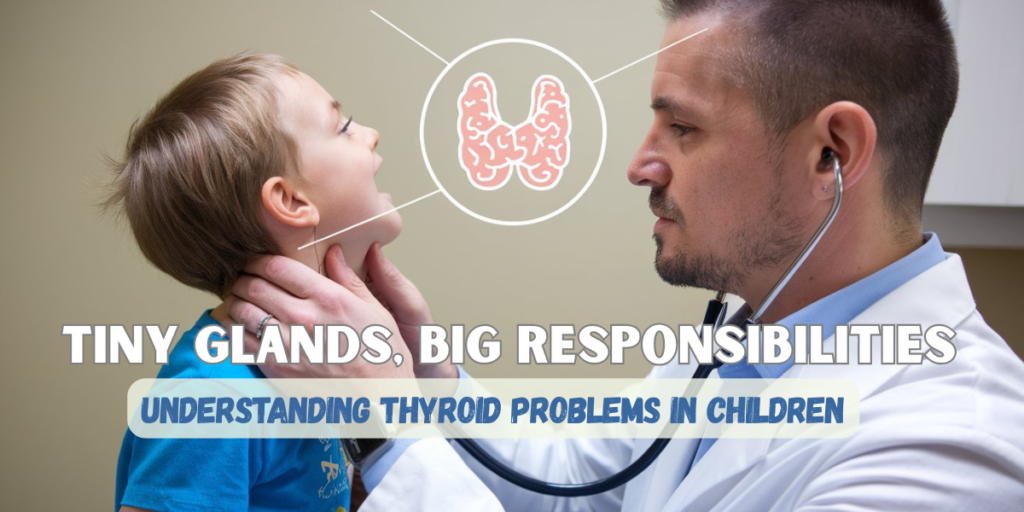
Tiny Glands, Big Responsibilities: Understanding Thyroid Problems in Children
Author: Rohan Smith | Functional Medicine Practitioner | Adelaide, SA
Quick Answer
Thyroid problems in children, including hypothyroidism, hyperthyroidism, and autoimmune thyroid disease, can affect growth, brain development, and emotional wellbeing. Early identification and appropriate medical care are essential. In some cases, a supportive functional medicine approach—used alongside standard care—may help address contributing factors such as nutrition, stress, and immune balance. You can learn more about how comprehensive thyroid assessment is approached in clinical practice on our thyroid health page.
What Does the Thyroid Gland Do?
The thyroid is a small, butterfly-shaped gland located at the base of the neck. Despite its size, it produces hormones that regulate metabolism, energy production, body temperature, and growth. In children, adequate thyroid hormone levels are critical for brain development, normal growth, pubertal timing, and emotional regulation. When thyroid hormone production is insufficient or excessive, a wide range of developmental and behavioural concerns can emerge.
Common Thyroid Disorders in Children
1. Hypothyroidism (Underactive Thyroid)
Hypothyroidism occurs when the thyroid does not produce enough hormone. It may be present from birth (congenital hypothyroidism) or develop later in childhood. Common features include:
- Slower growth or reduced height velocity
- Fatigue and excessive sleepiness
- Constipation
- Dry skin and brittle hair
- Poor concentration or school performance
- Mood changes such as low mood or irritability
- Delayed puberty
Congenital hypothyroidism is particularly important to identify early, as thyroid hormone is essential for normal brain development in infancy. In Australia, newborn screening programs routinely test for this condition shortly after birth. If hypothyroidism develops later, symptoms may be more subtle and progress gradually.
2. Hyperthyroidism (Overactive Thyroid)
Hyperthyroidism occurs when excessive thyroid hormone is produced. Although less common in children, it can present with:
- Rapid heartbeat or palpitations
- Unintentional weight loss despite normal appetite
- Anxiety, restlessness, or nervousness
- Tremors
- Difficulty sleeping
- Heat intolerance and increased sweating
In some cases, such as Graves’ disease, eye changes may also occur. While hyperthyroidism can initially accelerate growth, prolonged exposure to excess hormone may lead to early closure of growth plates.
3. Autoimmune Thyroid Disease
Autoimmune thyroid conditions, including Hashimoto’s thyroiditis and Graves’ disease, are increasingly recognised in children and adolescents. These disorders arise when the immune system targets thyroid tissue, altering hormone production over time. A family history of autoimmune disease can increase risk, and immune regulation is an important consideration in ongoing management.
How Are Thyroid Disorders Diagnosed?
Evaluation usually begins with blood testing, including thyroid-stimulating hormone (TSH) and free thyroxine (free T4). In some cases, thyroid antibody testing is used to assess for autoimmune involvement. Thyroid ultrasound may be recommended if there is thyroid enlargement or concern about structural changes.
Early diagnosis is important, as untreated thyroid dysfunction in children can contribute to learning difficulties, delayed growth, and other long-term complications. A detailed interpretation of thyroid markers—rather than relying on a single value—can be clinically important, which is a principle discussed further in our overview of integrated thyroid assessment.
How a Supportive Functional Medicine Approach May Help
Conventional medical management, including hormone replacement or suppression where indicated, remains the foundation of care for paediatric thyroid disorders. A functional medicine approach does not replace this care but may be used alongside it to explore factors that can influence overall health and immune balance.
Areas sometimes considered include:
- Assessment of nutrient status relevant to thyroid physiology (such as iodine, selenium, and zinc)
- Support for digestive health and nutrient absorption
- Identification of chronic stressors that may affect neuroendocrine regulation
- Reducing unnecessary inflammatory or environmental burdens
Gut and Immune Support
The gastrointestinal system plays a role in nutrient absorption and immune regulation. While gut-focused strategies are not treatments for thyroid disease itself, maintaining digestive health may support overall resilience, particularly in autoimmune conditions. This broader immune–gut relationship is explored in more detail in our educational resource on the gut microbiome.
Stress and Sleep Support
Chronic stress and poor sleep can influence hormonal signalling and immune function. Age-appropriate stress management strategies, consistent routines, and adequate sleep are important foundations for supporting children living with chronic health conditions, including thyroid disorders.
Conclusion
Thyroid problems in children—whether congenital, autoimmune, or acquired—can have meaningful effects on growth, learning, and wellbeing. Early identification and appropriate medical treatment are essential. When used responsibly alongside standard care, supportive nutritional and lifestyle strategies may help optimise overall health and resilience during childhood and adolescence.
Frequently Asked Questions
How are thyroid disorders treated in children?
Treatment depends on the specific condition and typically involves hormone replacement or other medical therapies prescribed by a doctor or paediatric endocrinologist. Supportive nutritional or lifestyle strategies may be used alongside medical care but should not delay or replace standard treatment.
Can thyroid problems affect a child’s development?
Yes. If left untreated, thyroid dysfunction can affect physical growth, cognitive development, and emotional regulation. Early diagnosis and appropriate treatment significantly reduce the risk of long-term complications.
When should a child be tested for thyroid problems?
Testing is generally considered if a child shows persistent symptoms such as slowed growth, fatigue, learning difficulties, unexplained weight changes, or signs of early or delayed puberty. Family history of thyroid or autoimmune conditions may also prompt earlier assessment, particularly if symptoms are subtle.
Key Insights
- Thyroid hormones are essential for normal growth and brain development in children.
- Both underactive and overactive thyroid conditions can present with subtle, non-specific symptoms.
- Medical diagnosis and treatment are central to care, with supportive strategies used only as adjuncts.
- Early assessment and monitoring are critical for long-term health outcomes.
Supporting Your Child’s Thyroid Health
If you’re concerned about your child’s growth, energy, learning, or emotional wellbeing, timely medical assessment is essential.
For families interested in a collaborative, integrative approach that works alongside standard paediatric care, you’re welcome to book a complimentary 15-minute Discovery Call to discuss whether additional support may be appropriate for your child.
References
- Fisher DA. Disorders of the thyroid in the newborn and infant. Endocr Rev. 1997 Apr;18(2):229-60. https://doi.org/10.1210/edrv.18.2.0298
- American Academy of Pediatrics Newborn Screening Authoring Committee. Newborn screening fact sheets. Pediatrics. 2006 Sep;118(3):e934-63. https://doi.org/10.1542/peds.2006-1783
- LaFranchi SH. Congenital hypothyroidism: etiologies, diagnosis, and management. Thyroid. 1999 Jul;9(7):735-40. https://doi.org/10.1089/thy.1999.9.735
- Zoeller RT, Rovet J. Timing of thyroid hormone action in the developing brain: evidence from rodents and humans. Endocrinology. 2004 Jul;145(7):2739-45. https://doi.org/10.1210/en.2004-0223
- De Groot L et al. Management of thyroid dysfunction during pregnancy and postpartum: an Endocrine Society clinical practice guideline. J Clin Endocrinol Metab. 2012 Aug;97(8):2543-65. https://doi.org/10.1210/jc.2011-2803
- Brown RS. Autoimmune thyroid disease in children and adolescents. J Clin Endocrinol Metab. 2009 Sep;94(9):3175-85. https://doi.org/10.1210/jc.2009-0730
- Rivkees SA. Pediatric Graves’ disease: management in the post-propylthiouracil era. Int J Pediatr Endocrinol. 2014;2014(1):10. https://doi.org/10.1186/1687-9856-2014-10
- Garbe E et al. Hyperthyroidism in children and adolescents: a review. Horm Res Paediatr. 2011;75(1):1-8. https://doi.org/10.1159/000321370
- Vanderpump MPJ. The epidemiology of thyroid disease. Br Med Bull. 2011;99(1):39-51. https://doi.org/10.1093/bmb/ldr033
- Zimmermann MB. Iodine deficiency. Endocr Rev. 2009 Jun;30(4):376-408. https://doi.org/10.1210/er.2009-0011
- Ventura M et al. Selenium and thyroid disease: from pathophysiology to treatment. Int J Endocrinol. 2017;2017:1297658. https://doi.org/10.1155/2017/1297658
- Gaitonde DY et al. Hypothyroidism: an update. Am Fam Physician. 2012 Aug 1;86(3):244-51. https://pubmed.ncbi.nlm.nih.gov/22963093/
- Williams GR. Neurodevelopmental and neurophysiological actions of thyroid hormone. J Neuroendocrinol. 2008 Jun;20(6):784-94. https://doi.org/10.1111/j.1365-2826.2008.01733.x
- Wiersinga WM. Thyroid autoimmunity. Endocr Dev. 2014;26:139-57. https://doi.org/10.1159/000363163
- Chaker L et al. Hypothyroidism. Lancet. 2017 Aug 26;390(10101):1550-62. https://doi.org/10.1016/S0140-6736(17)30703-1