Detoxification: Supporting Your Body’s Natural Cleansing
Quick Answer
Detoxification is a continuous, enzyme-driven process performed primarily by the liver, kidneys, and gastrointestinal tract. Rather than a short-term cleanse or fast, true detoxification relies on cytochrome P450 enzymes (Phase I) and conjugation pathways involving glutathione, sulfation, and glycination (Phase II) to transform and eliminate metabolic waste, environmental chemicals, and endogenous toxins. Supporting these pathways requires adequate micronutrients, functional gut integrity, and effective elimination rather than extreme diets or commercial detox products (1,2).
At a Glance
- The liver performs two-phase enzymatic detoxification using cytochrome P450 enzymes (Phase I) and conjugation with glutathione, sulfate, glycine, or methyl groups (Phase II)
- Imbalanced Phase I and Phase II activity may increase oxidative stress and allow reactive intermediate metabolites to recirculate
- Dietary fibre may reduce toxin reabsorption by binding bile-conjugated compounds and supporting regular elimination via the enterohepatic circulation
- The gut microbiome contributes to xenobiotic metabolism and helps maintain intestinal barrier integrity
- Silymarin from milk thistle (Silybum marianum) has been associated with hepatocyte protection and antioxidant capacity in liver stress models
- Functional testing, including heavy metal panels and comprehensive stool analysis, may be considered when detoxification capacity appears insufficient
How Does Detoxification Work?
Biotransformation of potentially harmful compounds into water- or bile-soluble forms for safe excretion is the core function of the body’s detoxification system. This process relies on coordinated activity between the liver, kidneys, gut, and biliary system, with additional support from the lymphatic network (1–3).
The Liver: Phase I and Phase II Detoxification
The liver is the primary organ responsible for detoxification, performing biotransformation through a two-phase enzymatic process first characterised by researchers including Frank Peter Guengerich at Vanderbilt University:
| Phase | Key Enzymes/Molecules | Process | Outcome |
|---|---|---|---|
| Phase I (Functionalisation) | Cytochrome P450 (CYP) enzyme superfamily | Oxidation, reduction, or hydrolysis of compounds | Generates reactive intermediate metabolites (1,4) |
| Phase II (Conjugation) | Glutathione S-transferase (GST), sulfotransferases, UDP-glucuronosyltransferases | Conjugation with glutathione, sulfate, glycine, or methyl groups | Produces less reactive, water-soluble metabolites for elimination via bile or urine (1,4–6) |
Balanced Phase I and Phase II activity is important, as insufficient conjugation capacity may increase oxidative stress and toxin recirculation. Sheng C. Lu’s research on glutathione synthesis regulation has highlighted how glutathione depletion can compromise Phase II capacity (5,6).
The Kidneys
The kidneys filter water-soluble toxins, metabolic waste products including urea and creatinine, and excess minerals from the bloodstream for elimination in urine. Adequate hydration and healthy glomerular filtration rate (GFR) support this clearance process, as described in Guyton and Hall’s Textbook of Medical Physiology (7).
The Gut and Bile Flow
The gastrointestinal tract supports detoxification by limiting toxin absorption and facilitating excretion through the enterohepatic circulation. Bile produced by hepatocytes transports fat-soluble compounds into the intestinal lumen, where sufficient dietary fibre helps bind these substances and reduce reabsorption, as demonstrated in research by Ronald J. Jandacek (8–10).
A well-balanced gut microbiome further contributes by assisting in xenobiotic metabolism and maintaining intestinal barrier integrity, as described by Sandrine P. Claus and colleagues in Nature Reviews Microbiology. You can explore this relationship in more detail in our gut microbiome resource (9,11).
Nutrients and Herbs That Support Detoxification
Evidence-based nutrients and dietary components can assist normal detoxification pathways without requiring aggressive cleanses or commercial protocols.
| Nutrient/Compound | Mechanism | Detox Phase Supported |
|---|---|---|
| Glutathione and precursors (N-acetylcysteine, glycine) | Central role in Phase II conjugation and antioxidant defence via glutathione S-transferase | Phase II (5,6) |
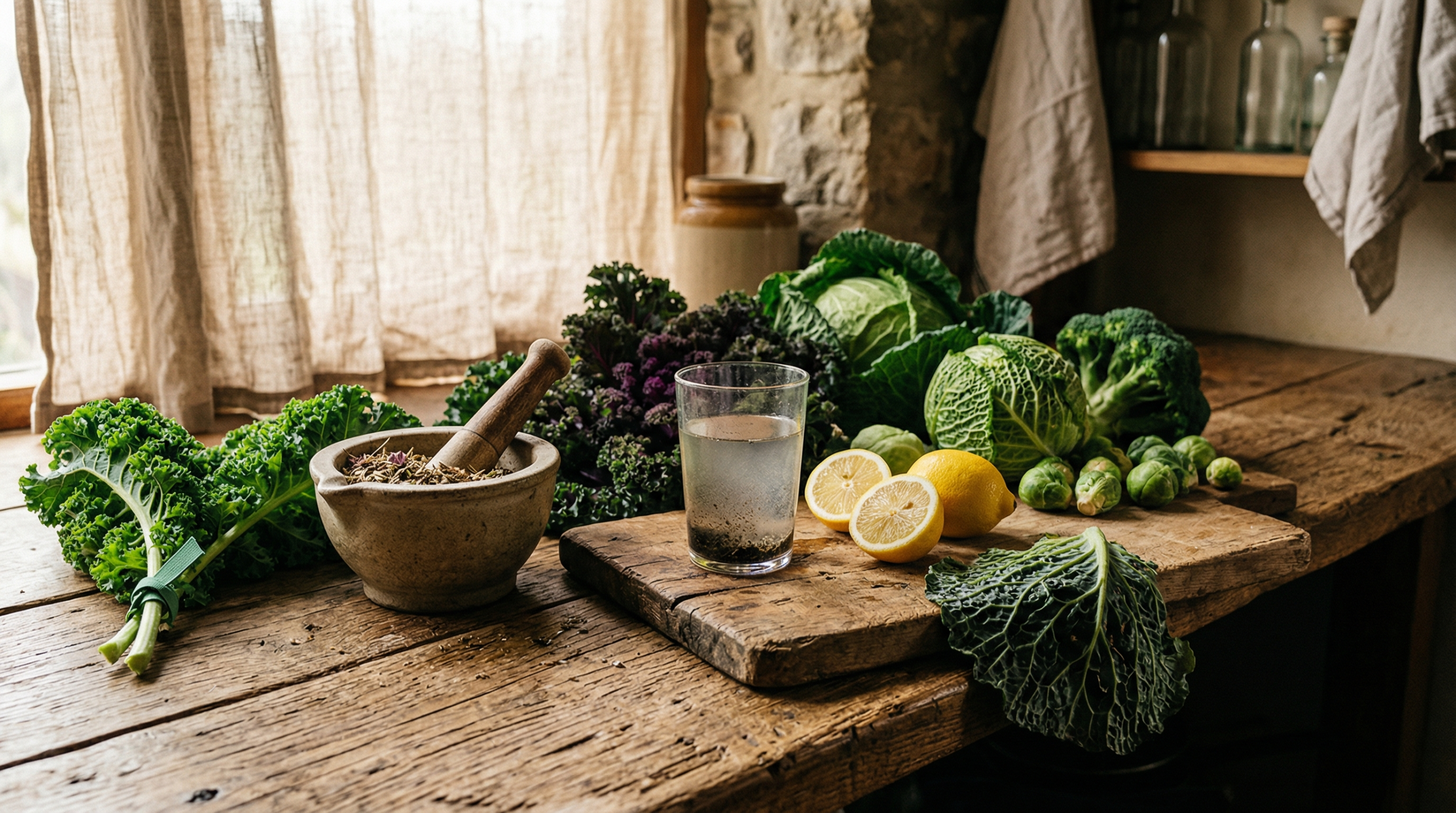
| Sulforaphane from cruciferous vegetables (broccoli, kale, Brussels sprouts) | Supports sulfation pathways and induces Nrf2-mediated glutathione synthesis | Phase II (12) |
| Dietary fibre (soluble and insoluble) | Promotes toxin binding in the gut and regular stool elimination | Elimination (8,10) |
| Silymarin from milk thistle (Silybum marianum) | May support hepatocyte membrane integrity and antioxidant capacity, as demonstrated by Polyak et al. in Clinical Gastroenterology and Hepatology | Hepatoprotection (13,14) |
Functional Testing: When a Personalised Approach Is Considered
Chronic exposure to environmental chemicals, pharmaceutical metabolites, or sustained metabolic stress may exceed the body’s inherent detoxification capacity in some individuals. Functional testing may be considered when symptoms such as persistent fatigue, multiple chemical sensitivity (MCS), medication intolerance, or elevated inflammatory markers like high-sensitivity C-reactive protein (hs-CRP) are present (2,15). This pattern is commonly seen in individuals with long-term energy issues, including those explored in our chronic fatigue resource.
| Test Type | What It Assesses | When Considered |
|---|---|---|
| Heavy metal testing (blood, urine, or hair) | Exposure to mercury, lead, arsenic, and cadmium | Occupational exposure, dental amalgams, contaminated water sources (16) |
| Liver biochemistry panel (ALT, AST, GGT, bilirubin) | Enzyme patterns associated with hepatic stress and bile flow | Unexplained fatigue, medication intolerance, elevated inflammatory markers (7) |
| Comprehensive stool analysis (CDSA) | Microbiome balance, intestinal inflammation (calprotectin, secretory IgA), toxin-binding capacity | Persistent GI symptoms, suspected dysbiosis, impaired elimination (9,11) |
Simple, Evidence-Based Ways to Support Detoxification
Daily habits that support the liver, kidneys, and gut may be more effective than periodic cleanses for maintaining detoxification capacity.
- Maintain hydration to support renal filtration and glomerular clearance of water-soluble metabolites (7).
- Prioritise whole foods rich in phytonutrients, polyphenols, and both soluble and insoluble fibre (8,12).
- Encourage regular bowel movements to minimise toxin reabsorption via the enterohepatic circulation (10).
- Engage in regular movement to support venous return, circulation, and lymphatic drainage (17).
- Reduce ongoing exposures from alcohol, ultra-processed foods, and unnecessary chemical sources such as pesticides, plasticisers (BPA, phthalates), and volatile organic compounds (VOCs) where possible (2).
Next Steps
- Optimise your foundations: Focus on hydration, whole-food nutrition rich in fibre and phytonutrients, and regular bowel movements to support your body’s natural detoxification pathways.
- Reduce unnecessary exposures: Minimise alcohol, ultra-processed foods, and environmental chemical sources where practical to ease the burden on your liver and kidneys.
- Consider functional assessment: If you experience persistent fatigue, chemical sensitivity, or unexplained inflammatory symptoms, targeted testing may help identify whether detoxification capacity is being exceeded.
Frequently Asked Questions
Key Insights
- Detoxification is a continuous, enzyme-driven physiological process, not a short-term cleanse or protocol
- The liver, kidneys, gut, and bile flow work together to transform and eliminate toxins safely
- Balanced Phase I and Phase II liver activity is essential to prevent toxin accumulation and oxidative stress
- Adequate fibre intake, hydration, and regular bowel movements reduce toxin reabsorption
- Functional testing may be considered when symptoms suggest detoxification capacity is being exceeded
- Sustainable detox support focuses on nutrition, gut health, and lifestyle, not extreme interventions
Citable Takeaways
- Cytochrome P450 enzymes perform Phase I detoxification through oxidation, reduction, or hydrolysis of xenobiotic compounds, as characterised by Guengerich in Chemical Research in Toxicology (2008).
- Glutathione, synthesised from cysteine, glycine, and glutamate, is the primary conjugation molecule in Phase II detoxification and a major intracellular antioxidant, according to Forman et al. in Molecular Aspects of Medicine (2009).
- Dietary fibre may reduce toxin reabsorption by binding bile-conjugated compounds in the gut, with Anderson et al. documenting health benefits including improved elimination in Nutrition Reviews (2009).
- The gut microbiome contributes to xenobiotic metabolism and intestinal barrier integrity, as described by Claus et al. in Nature Reviews Microbiology (2016).
- Silymarin from Silybum marianum (milk thistle) has been associated with hepatocyte protection and antioxidant capacity in liver stress models, according to Federico et al. in World Journal of Gastroenterology (2017).
- Sulforaphane from cruciferous vegetables may modulate carcinogen metabolism and support Phase II detoxification via Nrf2 pathway activation, as shown by Talalay and Fahey in the Journal of Nutrition (2001).
Support Your Body’s Natural Detox Pathways
If persistent fatigue, chemical sensitivity, or unexplained symptoms suggest your detoxification capacity may be under strain, a personalised functional medicine assessment can help identify the contributing factors. At Elemental Health and Nutrition, we investigate liver function, gut integrity, and metabolic patterns to guide sustainable, evidence-informed support strategies.
References
- Guengerich FP. Cytochrome P450 and chemical toxicology. Chem Res Toxicol. 2008 Jan;21(1):70-83. https://doi.org/10.1021/tx700079z
- Hodgson E. A Textbook of Modern Toxicology. 4th ed. Hoboken, NJ: Wiley; 2010.
- Jandacek RJ. Enterohepatic circulation of toxic substances. Adv Drug Deliv Rev. 2013 Jun;65(7):1007-14. https://doi.org/10.1016/j.addr.2013.04.005
- Parkinson A, Ogilvie BW. Biotransformation of xenobiotics. In: Casarett & Doull’s Toxicology: The Basic Science of Poisons. 9th ed. New York: McGraw-Hill Education; 2018.
- Forman HJ et al. Glutathione: overview of its protective roles, measurement, and biosynthesis. Mol Aspects Med. 2009 Feb-Apr;30(1-2):1-12. https://doi.org/10.1016/j.mam.2008.08.006
- Lu SC. Regulation of glutathione synthesis. Mol Aspects Med. 2009 Feb-Apr;30(1-2):42-59. https://doi.org/10.1016/j.mam.2008.05.007
- Hall JE. Guyton and Hall Textbook of Medical Physiology. 14th ed. Philadelphia: Elsevier; 2021.
- Anderson JW et al. Health benefits of dietary fiber. Nutr Rev. 2009 Apr;67(4):188-205. https://doi.org/10.1111/j.1753-4887.2009.00189.x
- Claus SP et al. Gut microbiota and xenobiotic metabolism. Nat Rev Microbiol. 2016 Oct;14(10):611-23. https://doi.org/10.1038/nrmicro.2016.90
- Slavin JL. Fiber and prebiotics: mechanisms and health benefits. Nutrients. 2013 Apr 22;5(4):1417-35. https://doi.org/10.3390/nu5041417
- Bischoff SC et al. Intestinal permeability – a new target for disease prevention and therapy. BMC Gastroenterol. 2014 Nov 18;14:189. https://doi.org/10.1186/s12876-014-0189-7
- Talalay P, Fahey JW. Phytochemicals from cruciferous plants protect against cancer by modulating carcinogen metabolism. J Nutr. 2001 Nov;131(11 Suppl):3027S-3033S. https://doi.org/10.1093/jn/131.11.3027S
- Polyak SJ et al. Milk thistle and liver protection: mechanisms and clinical applications. Clin Gastroenterol Hepatol. 2013 Oct;11(10):1261-8. https://doi.org/10.1016/j.cgh.2013.03.031
- Federico A et al. Silymarin/silybin and chronic liver disease: a marriage of many years. World J Gastroenterol. 2017 Mar 7;23(9):1645-1656. https://doi.org/10.3748/wjg.v23.i9.1645
- Jones DP. Redefining oxidative stress. Antioxid Redox Signal. 2006 Sep-Oct;8(9-10):1865-79. https://doi.org/10.1089/ars.2006.8.1865
- Tchounwou PB et al. Heavy metal toxicity and the environment. EXS. 2012;101:133-64. https://doi.org/10.1007/978-3-7643-8340-4_6
- Schmid-Schönbein GW. The lymphatic system in health and disease. Ann Biomed Eng. 1990;18(2):155-71. https://doi.org/10.1007/BF02364307